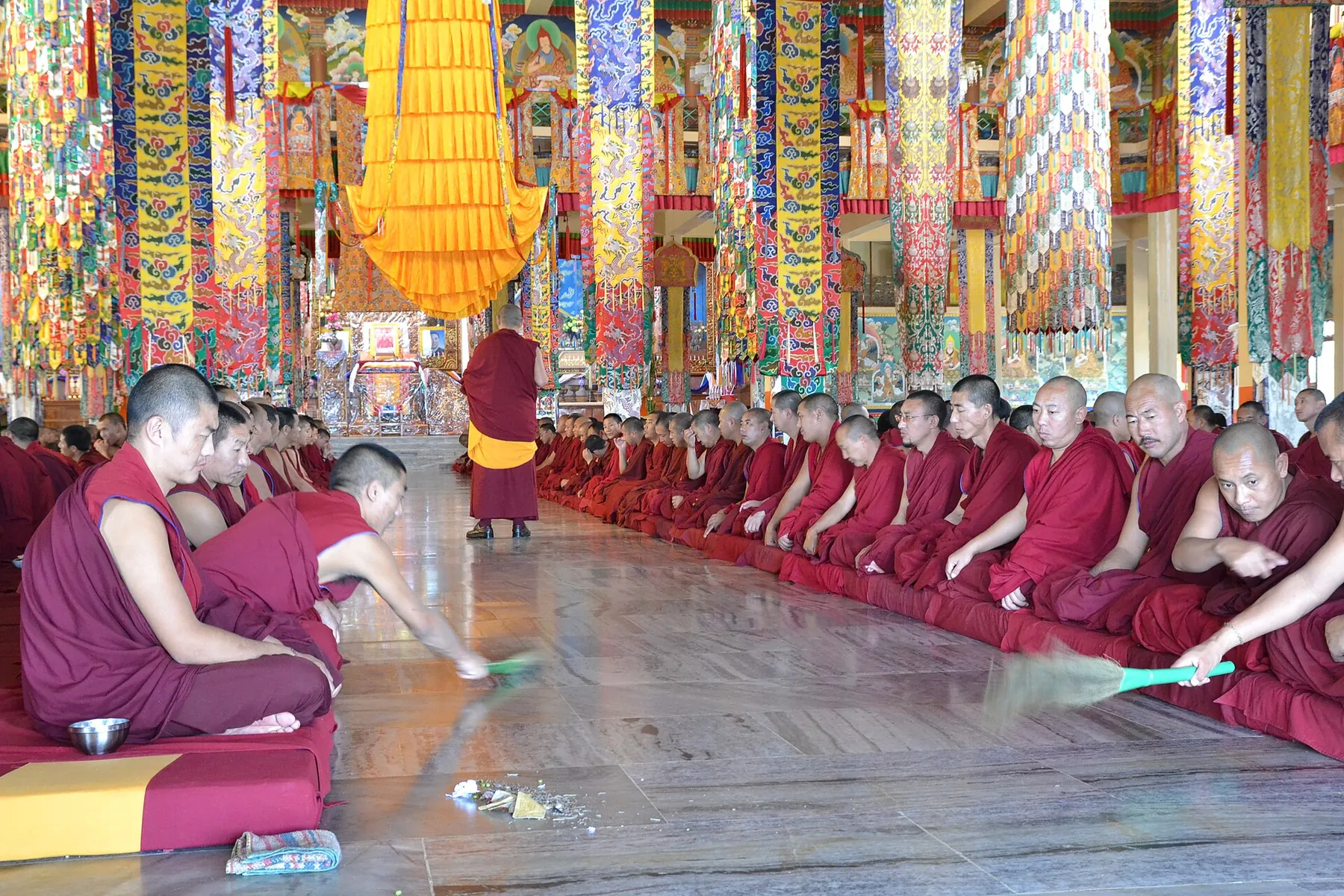
Fourteen people over six hundred years, of whom four died
before they were twenty-two, one gave back his robes to write poetry, and one has spent sixty-six
years as a refugee. Here is the whole line, why the present one lives in India, and how the next
one will be found.
First, the title
Dalai is not Tibetan. It is Mongolian, and it means ocean. The Mongol ruler Altan
Khan gave the title to Sonam Gyatso in 1578, and because Sonam Gyatso was already recognised as
the third in a line of reincarnations, the title was applied backwards to the two masters before
him. So the First and Second Dalai Lamas were never called that in their own lifetimes.
The full sense of the Tibetan honorific is closer to ocean of wisdom. Within the
tradition each Dalai Lama is understood as an emanation of Avalokiteshvara, the bodhisattva of
compassion and the patron figure of Tibet.
One to fourteen
The line
Dates and a few sentences each. The gaps between a death and the next
recognition are real: a successor is a small child, found years later.
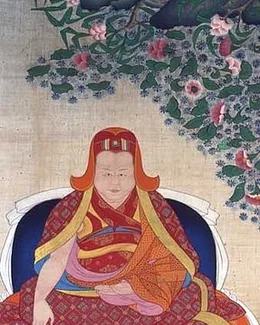
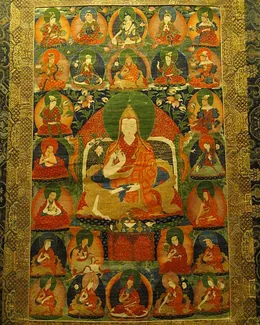
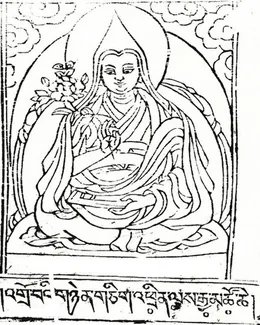
1stUnknown artist · Public domain
Gendun Drup 1391 to 1474
The founder of Tashi Lhunpo.
A direct disciple of Je Tsongkhapa. He founded Tashi Lhunpo monastery at Shigatse in 1447 and
wrote more than eight substantial books. He was not called Dalai Lama in his lifetime: the title
was given later and applied backwards to him and to his successor.
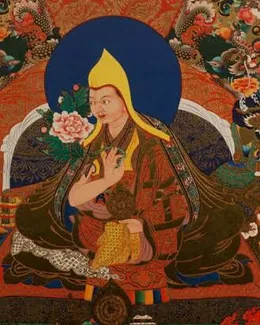
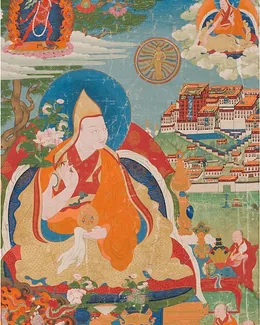
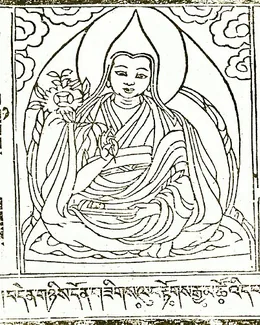
2ndwww.treasuryoflives.org · Public domain
Gendun Gyatso 1475 to 1542
Recognised at eleven; revived the Great Prayer Festival.
The first of the line to be recognised as a reincarnation, at the age of eleven. In 1518 he
revived Monlam Chenmo, the Great Prayer Festival that Tsongkhapa had instituted in 1409, and which
is still the high point of the Geluk year.
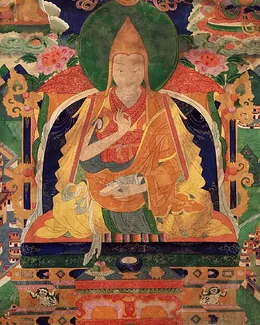
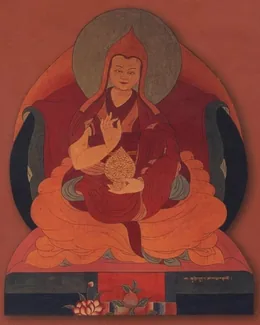
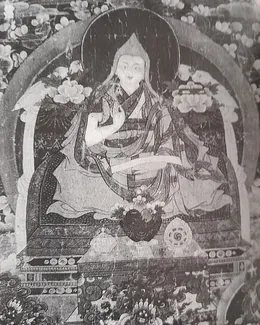
3rdUnknown tibetan artist. · CC BY-SA 4.0
Sonam Gyatso 1543 to 1588
The first to actually hold the title.
In 1578 the Mongol ruler Altan Khan gave him the title Dalai, a Mongolian word meaning
ocean, rendered in Tibetan as Gyatso. Because he was recognised as the third in an existing line,
the title was applied retrospectively to the two before him. He founded Kumbum and Lithang
monasteries.
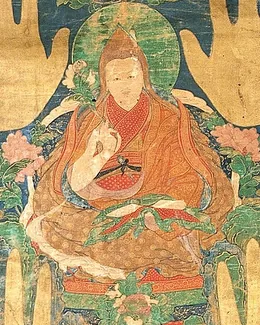
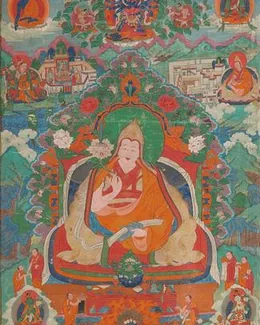
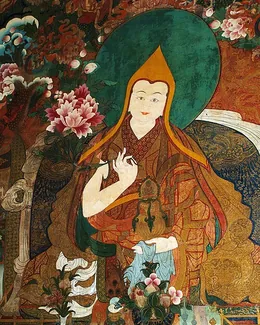
4thUnknown artist · CC BY-SA 4.0
Yonten Gyatso 1589 to 1617
The only Dalai Lama born outside Tibet.
Born in Mongolia, a descendant of Altan Khan, which sealed the alliance between the Geluk
tradition and the Mongols. He died at Drepung at twenty-seven.
5thUnknown artist · Public domain
Ngawang Lobsang Gyatso 1617 to 1682
The Great Fifth: unified Tibet and began the Potala.
The most politically consequential of the line. Enthroned in 1642 as both spiritual and temporal
ruler of Tibet, uniting the country under the Ganden Phodrang government. Construction of the
Potala Palace began in 1645 and took forty-three years. He was also a prolific scholar and an
unusually ecumenical one, studying and supporting traditions other than his own.
6thhttp://www.geocities.com/Athens/Ithaca/4886 · Public domain
Tsangyang Gyatso 1683 to 1706
The poet who gave the robes back.
The most unusual figure in the lineage. He renounced his monastic vows, lived in Lhasa rather
than the Potala, frequented taverns, and wrote love poetry that Tibetans still sing. He remained
the recognised Dalai Lama throughout. He died young, in Mongol custody, in circumstances that have
been argued about ever since.
7thMusée Guimet · Public domain
Kelsang Gyatso 1708 to 1757
Rebuilt the government after decades of chaos.
Enthroned at the Potala in 1720 after a period of invasion and civil conflict. In 1751 he
established the Kashag, the council of ministers, which governed Tibet until 1959. A serious
scholar and a careful administrator, and the one who put the institution back on its feet.
8thDaderot · CC0
Jamphel Gyatso 1758 to 1804
Built the Norbulingka.
A quiet, studious figure who preferred religious life to government. He built the Norbulingka
park and summer palace in Lhasa, which every Dalai Lama after him used.
9thUnknown artist · Public domain
Lungtok Gyatso 1805 to 1815
Died at nine years old.
Recognised in 1807 and dead at nine. The four Dalai Lamas from the ninth to the twelfth all died
young, and none of them reached the age at which they could have ruled independently. Tibet was
governed by regents throughout, in a period historians treat with a good deal of suspicion.
10thUnknown artist · Public domain
Tsultrim Gyatso 1816 to 1837
Died at twenty-one.
Born in Lithang in Kham. He reconstructed parts of the Potala in 1831 and died six years later,
aged twenty-one.
11thUnknown artist · Public domain
Khedrup Gyatso 1838 to 1856
Died suddenly at eighteen.
Recognised in 1841. He assumed full authority shortly before his death at the Potala in 1856,
at eighteen.
12thUnknown artist · Public domain
Trinley Gyatso 1856 to 1875
Died at twenty.
Took spiritual and temporal leadership in 1873 at the age of eighteen. He was dead within two
years. His death closed the long stretch of short-lived Dalai Lamas and regents.
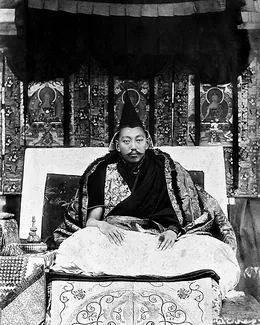
13thM. Sain, Darjeeling · Public domain
Thubten Gyatso 1876 to 1933
The Great Thirteenth: modernised Tibet and saw what was coming.
He took political authority in 1895 and survived both a British invasion and a Chinese one,
fleeing into exile twice and returning twice. He introduced Tibet's first currency and postage
stamps, sent students abroad, began a standing army, and left a written warning to his people that
if they did not prepare, their religion and government would be destroyed and the Tibetans would
become the servants of an invading force. He died in 1933.
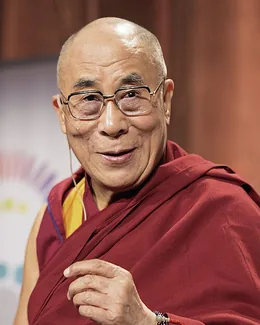
14thChristopher Michel · CC BY-SA 4.0
Tenzin Gyatso born 1935
The present Dalai Lama.
Born Lhamo Dhondup on 6 July 1935 at Taktser in Amdo, and recognised at the age of two as the
reincarnation of the Thirteenth. He began monastic education at six. In 1950, aged fifteen, he
assumed temporal power as China invaded. He met Mao Zedong, Deng Xiaoping and Zhou Enlai in Beijing
in 1954. In 1959 he sat his final Geshe Lharampa examination in Lhasa and, months later, fled into
exile. He received the Nobel Peace Prize in 1989 and gave up all political authority in 2011.
Why India
How the Dalai Lama came to live in exile
The short answer is that in 1959 staying would very probably have meant
detention or death. The longer answer took ten years.
The invasion
The People's Liberation Army enters eastern Tibet. In November 1950, at fifteen, His Holiness is called to assume full temporal power, years early.
Beijing
He spends months in China and meets Mao Zedong, Deng Xiaoping and Zhou Enlai, trying to find a settlement that keeps Tibet's religion and institutions intact.
The uprising
A national uprising in Lhasa is suppressed by the Chinese military. That same year he completes his final examination for the Geshe Lharampa degree, the highest scholastic degree of his own tradition.
The escape
He leaves Lhasa and crosses the Himalaya into India. Some eighty thousand Tibetans follow over the following months and years.
Dharamsala
The Government of India offers refuge. The Tibetan administration in exile settles at Dharamsala in Himachal Pradesh, where it remains.
Rebuilding the seats
Land is granted in Karnataka and elsewhere. Ganden and Drepung are re-established at Mundgod, Sera at Bylakuppe in 1970, Tashi Lhunpo at Bylakuppe in 1972. The monastic curriculum is restarted from memory.
The Nobel Peace Prize
Awarded for his non-violent struggle for the liberation of Tibet.
Stepping back from politics
On 14 March he asks to be relieved of temporal authority, and on 29 May formally transfers it to the elected leadership of the Tibetan administration. Four centuries of Dalai Lamas holding political power come to a deliberate end.
What exile actually produced
It is worth saying plainly, because it is easy to miss behind the politics. Everything
this website describes exists because of what happened after 1959. The three great seats were
rebuilt in south India. Nuns began taking the same degree as monks. The texts were printed
and translated rather than copied by hand. And a tradition that had been almost entirely
confined to the Tibetan plateau ended up with teaching centres in thirty-four countries.
And what it cost
Also plainly. Monasteries inside Tibet were destroyed on a scale that is difficult to take
in. The monks who rebuilt Sera at Bylakuppe cleared forest by hand and lived off the harvest
for years. The Fourteenth Dalai Lama has not seen Lhasa since 1959. None of the rest of it
was a fair trade.
The next one
How a Dalai Lama is actually found
This gets reported badly, so here it is as the tradition and His Holiness
himself have set it out.
Two different kinds of rebirth
His Holiness drew this distinction carefully in his statement of 24 September 2011, and it
matters for everything else on this page. Ordinary beings are reborn involuntarily, driven by
karma and the destructive emotions. They have no say in where they go. A highly realised
being is in a different position: such a person can direct their rebirth, and does so through
the force of compassion for others and through prayers made for their benefit.
So the tulku system is not a general mechanism available to anybody. It rests on a claim
about a small number of people who have reached a level of realisation where choice is
possible. Keep that in mind whenever somebody offers to arrange your next life.
Recognition has never been a single test. The traditional procedures include:
Predictive letters and indications left by the predecessor.
The child recalling details, people or events from the previous life.
The child identifying possessions that belonged to the predecessor, among decoys.
Consultation with senior lamas and with the oath-bound Dharma protectors linked to the lineage.
Visions sought at the sacred lake Lhamo Latso, which has guided several previous searches.
The current position
Settled in 2025
In 2011 His Holiness said that when he was about ninety he would consult the heads of the
Tibetan Buddhist traditions, the Tibetan public and other concerned people, and decide whether
the institution of the Dalai Lama should continue at all. He had raised that question as far
back as 1969.
He gave the answer in a statement dated 21 May 2025 and released on 2 July 2025, just before
his ninetieth birthday. The institution will continue. Responsibility for recognising the
future reincarnation rests with the Gaden Phodrang Trust, his own foundation, consulting the
heads of the Tibetan Buddhist traditions and the oath-bound protectors linked to the lineage,
and following the procedures of past tradition. In his words, the Trust
“has sole authority to recognize the future reincarnation; no one else has any such
authority to interfere in this matter.”
The 2011 statement had already addressed the other half of this. It states that no
recognition or acceptance should be given to a candidate chosen for political ends by anybody,
including by the government of the People's Republic of China, and points out the oddity of an
officially atheist state appointing reincarnations at all.
Birth, recognition, 1950, Beijing in 1954, the Geshe Lharampa examination, the 1959 exile, the 1989 Nobel Peace Prize, and the 2011 retirement from political office.
The distinction between rebirth driven by karma and rebirth directed by a realised being, the methods of recognition, and the rejection of politically chosen candidates.
Every factual claim on this page rests on one of the sources above. Links
open in a new tab. The full list for the whole site, and the standard this site holds itself to,
is on the sources page.
Next
Where Buddhism lives, and where it was nearly wiped out
Tibet is not the only place this happened. Mongolia lost more than six hundred monasteries
in two years. Cambodia lost almost its entire monastic order. Both came back.