Appendix
Sources & credits
Every date, number and claim on this site is traceable. Here is where each came from.
Written sources
Every source, in one place
The whole registry, ordered by publisher. Each page on this site carries its own subset at the foot of the page, and each entry says what it supports.
- Монгол Далай ламын батламжтай 20 хутагт хувилгаантай (Mongolia has twenty recognised incarnations holding the Dalai Lama’s confirmation)
A. Tseesüren, News.MN, 14 June 2022 - How a recognition is confirmed in Mongolia: Gandantegchinlen and the local administration take part, and the Dalai Lama confirms it. The list of the twenty who hold that confirmation, with Darba Bandida khuvilgaan Danzanchoijilodoi thirteenth on it. That no recognitions were made between 1928 and 1990. That modern Mongolian incarnations study at Gomang, Sera Jey and Dharamsala. And that more than two hundred people are reported to style themselves incarnations without any of this.
- How Doctor Adrian Feldmann became Buddhist monk Thubten Gyatso
ABC News, Australia - The doctor-to-monk account, and the free medical clinic in Nepal, reported independently.
- What Is Chakrasamvara Practice?
Alexander Berzin, Study Buddhism - That the combined practice of Guhyasamaja, Chakrasamvara and Vajrabhairava is a speciality of the Geluk system and of Tsongkhapa in particular, and the forms emphasised in the monasteries and tantric colleges.
- What Is Guhyasamaja Practice?
Alexander Berzin, Study Buddhism - Guhyasamaja as the foundation of the Geluk tantric system, and the three vajras of enlightened body, speech and mind.
- What Is Vajrabhairava, Yamantaka Practice?
Alexander Berzin, Study Buddhism - Vajrabhairava and Yamantaka as the same practice under two names, and the Thirteen-Deity form used in the Geluk tradition.
- The Efficiency of General Tantra: Gelug
Alexander Berzin, Study Buddhism - The Geluk account of why tantra is held to be quicker than sutra: the practice is closer to the resultant stage, method and wisdom are more closely united, and there are special bases and levels of mental activity for understanding voidness.
- Tantra: The Four Purities
Alexander Berzin, Study Buddhism - The four purities, and that tantra takes the appearance of a buddha-figure's body as the basis for meditation on voidness.
- Use of the Shambhala Legend for Control of Mongolia
Alexander Berzin, Study Buddhism - The sixth incarnation from the other side, in English: that the early Mongolian communist regime tolerated Buddhism because monastic leaders such as Darva Bandida argued for a return to early Buddhist simplicity, and that the Buryat scholar Jamsrano supported him.
- Buddhism Survived the Khmer Rouge to Give Hope to Cambodia
Berkley Center, Georgetown University - The near-total destruction of the Cambodian monastic order and its rebuilding.
- Study Buddhism
Berzin Archives - A free archive of explanations of Tibetan Buddhism built with Geluk teachers.
- A History of Buddhism in Russia: The Sangha and the Soviets
Buddhistdoor Global - The 1930s suppression in Buryatia, Kalmykia and Tuva, and the revival from the late 1980s.
- The Exclusivism of the New Kadampa Tradition
Buddhistdoor Global - Analysis of the New Kadampa Tradition's position and practice.
- Protected Area Permit
Bureau of His Holiness the Dalai Lama - PAP requirements for foreign nationals visiting the Bylakuppe, Mundgod and Hunsur settlements.
- The Middle-Way Policy
Central Tibetan Administration - The official policy since 1974: genuine autonomy within the People's Republic of China, explicitly not independence.
- Tibet, Tibetan Refugees and the Way Ahead
Central Tibetan Administration - The size of the Tibetan exile population and its decline over two decades.
- Chotrul Duchen, the Great Prayer Festival of Tibet
Central Tibetan Administration - The Tibetan administration's own account of the Day of Miracles and of the prayer festival that leads up to it.
- His Holiness the Dalai Lama Appoints the 104th Gaden Tripa
Central Tibetan Administration - His appointment on 24 June 2017, and that the office is conferred by the Dalai Lama.
- Tibetan Parliamentarians Attend Enthronement Ceremony of 105th Gaden Tripa
Central Tibetan Administration - That Sharpa Choje Jetsun Lobsang Dorjee Pelsangpo was given the office on 2 November 2024 and enthroned at Gaden Lachi on 26 November 2024, as regent of Tsongkhapa, and that the term is seven years.
- Doeguling Tibetan Settlement, Mundgod
Central Tibetan Relief Committee - The settlement founded in 1966, its population of over fifteen thousand, and its institutions.
- Buddhism and Revolution in Cambodia
Cultural Survival - The Khmer Rouge campaign against Buddhism between 1975 and 1979.
- Deer Park Buddhist Center
Deer Park - Founded in 1976 by Geshe Lhundub Sopa, a Sera Je geshe, in Oregon, Wisconsin.
- Rashaant khüree (Bandida Gegeenii khüree, Darbabandida khiid), record 884
Documentation of Mongolian Monasteries, Arts Council of Mongolia - The Tibetan name of the line, dar pa pan+di ta; the founding of the monastery in 1678 and its three sites; the first incarnation’s fifteen years at Sera, his Lharampa degree, his post as gesgüi of Sera Thekchenling and the title given him by the Dalai Lama; the dates of the Mongolian incarnations; the colleges, the thousand monks and the Jamsran protector; the sixth incarnation and Tseveen Jamsrano’s invitation of 1923; and the burning of the monastery in 1932. Compiled from Banzragch and Sainkhüü (2004), Chuluunbaatar (2004), Yeröölsüren (2005), the Khövsgöl aimag reference dictionary (2003) and an oral history interview recorded at Rashaant in 2007.
- The Hundred-Syllable Mantra of Vajrasattva
Drepung Gomang - The hundred-syllable mantra in Sanskrit, English and Tibetan.
- Travel guide to Drepung Monastery, Mundgod
Drepung Gomang Monastery - Drepung at Mundgod, its colleges, and the size of the monastic population.
- Phugpa Tibetan calendar archive
Edward Henning, kalacakra.org - The year-by-year Phugpa calendars from which every Gregorian date on the calendar page is read. Phugpa is the system used in Dharamsala, and the files annotate the Buddha days themselves.
- Mañjuśrī
Encyclopedia of Buddhism - The arapacana syllabary behind OM AH RA PA TSA NA DHIH, and the seed syllable DHIH.
- Дарба Бандида гэгээнтэн (Darpa Pandita Rinpoche)
Facebook - His own page, and the larger of his two: about 8,200 followers in September 2026, listed under Mysore. It supplies his name in Tibetan, which is copied from it programmatically rather than transcribed, the Cyrillic form of the lineage name, and his own description of himself as “Darpa Pandita the 7th Tenzin Choikye Lodoe Rinpoche”. Facebook serves the posts only to a reader who is logged in, so nothing from the page body is used here.
- FPMT 50th anniversary
FPMT - The founding at the end of 1975, the 1975 tour of nine countries, and the size of the network.
- Centres, projects and services
FPMT - The directory of 138 centres in 34 countries, transcribed country by country.
- Lama Thubten Yeshe
FPMT - Born 1935, entered Sera at six, studied until 1959, the first Western students in 1967, Kopan, the teaching tours, and the recognition of his reincarnation.
- Lama Zopa Rinpoche
FPMT - Born 1945 at Thami, recognised as the Lawudo Lama, Buxa Duar, Kopan, and thirty-nine years as spiritual director.
- Announcement regarding the reincarnation of Lama Zopa Rinpoche
FPMT - His Holiness confirming on 18 March 2025 that the reincarnation has taken rebirth in Nepal.
- Tenzin Ösel Hita
FPMT - Born 1985 in Bubión, recognised in 1986, educated at Sera, and his later life and work.
- Discovering Buddhism
FPMT - The fourteen-module introductory programme, its topics and how it is delivered.
- Mantras and their prerequisites
FPMT - When an initiation is required to recite a mantra and when it is not, and the oral transmission.
- The Benefits of Reciting Amitabha's Name Every Day
FPMT - Amitābha's short mantra and the instruction to recite it 108 times daily.
- FPMT Mongolia
FPMT - FPMT's work in Mongolia from 1999, and the naming of Ganden Do Ngag Shedrup Ling.
- Showing Respect to Holy Objects
FPMT - How khatas are handled, why one woven with mantras is not put on the table in front of the teacher, and the care of Dharma materials.
- 50 Years of FPMT: Ven. Thubten Gyatso's Story
FPMT - His own account of the years from ordination onwards, in FPMT's fiftieth anniversary series.
- Caring for the Dying and Dead: Essential Advice from Lama Zopa Rinpoche
FPMT - Nearly everything practical on the death page: that the job is to care for the mind while others care for the body, the instruction to use the dying person's own religious vocabulary, that no one crying should be in the room, the Medicine Buddha practice as the first thing after the breath stops, the Tibetan custom of not touching the body until a lama has done phowa, the crown hair, and the schedule of pujas across forty-nine days.
- Death and Dying: Practices and Resources
FPMT - FPMT's own collected material on death and dying, including the Eight Prayers for the Time of Death used in Geluk monasteries.
- The First Kopan Meditation Course
FPMT - The first course at Kopan in April 1971: ten days, taught by Lama Zopa Rinpoche to about a dozen students, on thought transformation.
- Kopan November Course: the most important education of your life
FPMT - The month-long November course running every year since 1971, its lamrim structure, an average of around two hundred students a year, and how many senior FPMT students first met the lamas there.
- A Joint Biography of Lama Yeshe and Lama Zopa Rinpoche
FPMT - Meeting Zina Rachevsky at Ghoom in 1967, the move to Nepal in 1968, the purchase of Kopan hill and the founding of the Nepal Mahayana Gompa Centre in 1969, the first course in 1971, the seventh course capped at 200 in autumn 1974, and the International Mahayana Institute from December 1973.
- The Passing of His Eminence the 104th Ganden Trisur Rinpoche Jetsun Lobsang Tenzin
FPMT - That the 104th Ganden Tripa, the formal head of the Geluk school, “showed the aspect of passing away on September 26, 2025 at his residence at Sera Je Monastery, Bylakkupe, India”.
- Mantra
FPMT Chokyi Gyaltsen Center - The Tibetan phonetic forms of the Chenrezig, Mañjuśrī, Green Tārā, Śākyamuni, Medicine Buddha and Lama Tsongkhapa mantras as used in practice.
- Prayers for Teachings (booklet)
FPMT Education Services - FPMT's own copy of the teaching-occasion prayers.
- Medicine Buddha Mantras
FPMT Education Services, 2008 - The long and short Medicine Buddha mantras exactly as printed, with the Tibetan pronunciation.
- FPMT Prayers for Teaching Occasions
FPMT Education Services, 2018 - The order of prayers before and after a teaching, arranged according to the instructions of Lama Zopa Rinpoche in 2008, and the rubric placing the long life prayer before the dedications.
- What is a Geshe?
FPMT Mandala - The four grades of the degree, the seventeen-year minimum at Sera Je, the twenty-three years for Lharampa, and the joint examinations of Sera, Drepung and Ganden.
- Other Titles in Tibetan Buddhism
FPMT Mandala - Lama, rinpoche, khenpo, khensur, khenrinpoche, kyabje, ani, trapa, and the honorific suffix.
- Ganden Do Ngag Shedrub Ling (archived April 2025)
FPMT Mongolia, via the Internet Archive - The centre's teachers in order: Ven. George Churinoff first, then Ven. Thubten Gyatso (Dr Adrian Feldman). Cited from the archive because fpmtmongolia.org stopped answering in September 2026.
- White Tārā Meditation for Long Life
FPMT, composed by Lama Zopa Rinpoche, Taipei 1994 - The White Tārā mantra as printed, the visualisation, and the note on practising without initiation.
- How to Do the Great Festival
FPMT, Lama Zopa Rinpoche Practice Series - The offering sequence: a mandala with representations of holy body, speech and mind, a khata and a money offering in an envelope, made first by a lama, geshe or centre representative and then by everybody else; that the sum should be an uneven number; and the verse recited while taking the blessing.
- Gaden Shartse Norling Monastery
Geluk International Foundation - Ganden Shartse regrouping in India in 1961 and relocating to Mundgod in 1970.
- Gaden Jangtse Monastic College
Geluk International Foundation - Ganden founded by Tsongkhapa in 1409, and Jangtse re-established at Mundgod in 1969 with 169 monks who had escaped Tibet.
- The Foundation of Buddhist Thought
Geshe Tashi Tsering, Wisdom Publications - The six-volume course from a Sera Mey geshe, and the programme behind it at Jamyang London.
- Tradition: Gelug Protectors
Himalayan Art Resources - That the three principal Geluk protectors are Six-armed Mahakala, Yama Dharmaraja and Vaishravana, that the selection originates with Tsongkhapa and his closest students, that the triad relates to the three scopes of the Lamrim, and that Magzor Gyalmo was popularised in the Geluk tradition by the Second Dalai Lama and is regarded as chief protector of the Lhasa region.
- Himalayan Art Resources
Himalayan Art Resources - The reference catalogue used to identify figures and check iconography.
- The 14th Dalai Lama lays out the future of his institution
International Campaign for Tibet - Reporting on the 2 July 2025 succession statement.
- Understanding Titles and Honorifics in the Tibetan Buddhist Tradition
Jamyang London Buddhist Centre - His Holiness, kyabje, tulku, geshema, khandro, jetsun, khenchen, tripa and trisur.
- In Memory of His Holiness Ganden Trisur Rinpoche Jetsun Lobsang Tenzin Palsangpo (1934-2025)
Jamyang London Buddhist Centre - His dates, and the London centre’s own account of him as a visiting teacher.
- Five-Line Prayer to Lama Tsongkhapa (Mig-tse-ma)
Kadampa Center - The five lines of the Migtsema with their English rendering.
- Kopan Monastery
Kopan Monastery - The monastery outside Kathmandu founded by Lama Yeshe and Lama Zopa Rinpoche.
- Kopan Monastery
Kopan Monastery, Kathmandu - The monastery itself, its courses and its conditions of attendance.
- The Five Great Treatises
Kopan Nunnery - Plain-language description of the five Indian root texts and their authors.
- The Meaning of OM MANI PADME HUM
Lama Yeshe Wisdom Archive - Lama Zopa Rinpoche on the six syllables: method, wisdom, and the transformation of body, speech and mind.
- Tara the Liberator
Lama Yeshe Wisdom Archive - Lama Zopa Rinpoche's word-by-word explanation of OM TARE TUTTARE TURE SOHA.
- Becoming Your Own Therapist
Lama Yeshe Wisdom Archive - Lama Yeshe's public talks, free to read, recommended as a first book.
- Big Love: The Life and Teachings of Lama Yeshe
Lama Yeshe Wisdom Archive - The authorised biography of Lama Yeshe, published by the archive that holds his teachings.
- Checking the Guru
Lama Yeshe Wisdom Archive - That a prospective teacher should be examined against the qualities set out in the lamrim, that fame and a large following are not a substitute for that examination, that Mahayana disciples would traditionally check a lama for as long as twelve years, and the counter-warning that checking indefinitely wastes the life you were trying to use.
- Introduction to Tantra
Lama Yeshe, Lama Yeshe Wisdom Archive - Lama Yeshe's own introduction, given in California in May 1980, in which he sets out that tantric practice needs an initiation and a foundation in the three principal paths: renunciation, bodhichitta and the wisdom of emptiness.
- Introduction to Tantra: Second Teaching
Lama Yeshe, Lama Yeshe Wisdom Archive - The second of the three discourses, on the preliminary meditations.
- Explaining Dharma Protectors
Lama Zopa Rinpoche, FPMT - What a Dharma protector is and is not, from within this tradition.
- Practice on the Four Great Holy Days
Lama Zopa Rinpoche, FPMT - Which four days count as the great holy days, the lunar date of each, what each commemorates, and the teaching that karmic results are multiplied on them, attributed to the vinaya text Treasure of Quotations and Logic.
- Practices for Ganden Ngamchoe, Lama Tsongkhapa Day
Lama Zopa Rinpoche, FPMT - That Ganden Ngamchoe falls on the twenty-fifth day of the tenth Tibetan month and marks Lama Tsongkhapa's parinirvana.
- The Benefits of Blessing Strings
Lama Zopa Rinpoche, Lama Yeshe Wisdom Archive - That the cords are blessed with many thousands of mantras, and Rinpoche's instruction that they are to be worn against the body rather than kept on a shelf or in a box.
- Practices at the Time of Death
Lama Zopa Rinpoche, Lama Yeshe Wisdom Archive - Further advice on what is recited at the time of death and afterwards.
- How to Find a Teacher
Lama Zopa Rinpoche, Lama Yeshe Wisdom Archive - Practical advice on finding a qualified teacher.
- Kyabje Khensur Jhado Chogtrul Rinpoche
Land of Medicine Buddha, FPMT - Born 1954 to a nomadic family near Namtso Lake north of Lhasa; recognised at three as the sixth Jhado Tulku; novice ordination from His Holiness the Dalai Lama in 1964; Sera Jey from 1972 to 1990 and then Gyutö Tantric College; Geshe Lharampa in 1991; teacher at Namgyal Monastery from 1992 and its abbot from 1997 to 2004.
- Lama Yeshe Wisdom Archive
LYWA - The collected teachings of Lama Yeshe and Lama Zopa Rinpoche, much of it free to read.
- FPMT in Mongolia 1999-2012
Mandala, FPMT - Lama Zopa Rinpoche's first visit to Mongolia in 1999, at the invitation of Bakula Rinpoche, and the registration of FPMT Mongolia that year.
- Protected Area Permit portal
Ministry of Home Affairs, Government of India - The official online application for Protected Area Permits.
- Biography
Office of His Eminence the Seventh Ling Rinpoche - Born in India on 18 November 1985; found at the Tibetan Children’s Village in Dharamsala at eighteen months, when he recognised a member of the search party; enthroned in October 1987; entered Drepung Loseling in 1990 at five and began formal study at ten; Geshe degree in November 2016; Gyutö Tantric College from April 2017 to February 2018.
- Useful Tibetan phrases
Omniglot - Tibetan script and a phonetic reading for each phrase on the phrasebook page. Where Wikivoyage also carries a phrase, the two agree.
- Dalai Lama celebrates 90th birthday
Radio Free Asia - The ninetieth birthday and the succession announcement around it.
- Brief Biography of His Eminence Jhado Rinpoche
Sed Gyued Monastery - The same life told by a monastery he teaches at, which gives his birthplace as Kongpo and Jhado Monastery as being in Chamdo. The two accounts of where he was born do not agree and this page gives both.
- About Us
Sera Jey Foundation - Current enrolment of more than 4,800 monk-students, and the 2022 University of Mysore affiliation.
- About Us
Sera Jey Monastic University - The founding by Jetsun Kunkhen Lodrö Rinchen Senge, the two administrations, the Geshe Lharampa degree, the 75th abbot, and the affiliated centres abroad.
- Re-establishment at Bylakuppe
Sera Jey Monastic University - The 1970 move: 197 Sera Jey and 103 Sera Mey monks, 225 acres at three quarters of an acre per monk, 147¾ acres to Sera Jey, 38 tiled houses, and the first assembly hall of 1976 to 1979.
- New Assembly Prayer Hall
Sera Jey Monastic University - The 1997 hall: proposed 1995, 23,275 square feet, 31 feet high, 110 pillars, an assembly of 3,500, inaugurated by His Holiness the Dalai Lama on 31 December 1997.
- Contact
Sera Jey Monastic University - The postal address, telephone number, travel distances from Bengaluru, and the list of international branch centres.
- Sera Jhe Health Care Committee
Sera Jhe Health Care - The health care committee founded in 1989 under the guidance of His Holiness the Dalai Lama, and its services to the monastery and the settlement.
- The Dalai Lama on questioning the advice of the guru
Shambhala Publications - Examining a teacher before accepting them, and the limits of guru devotion for ordinary practitioners.
- The Dalai Lama: Reliance on a Teacher
Shambhala Publications - The twelve-year mutual examination of teacher and student before the relationship is entered.
- Venerable Adrian Feldmann, author page
Smashwords - His three books: The World and Ourselves, A Leaf in the Wind, and The Perfect Mirror.
- Who We Are
Sravasti Abbey - The training monastery founded in Washington State in 2003 by Ven. Thubten Chodron.
- The Gelug Monastic Education System
Study Buddhism - The five great treatises, the sequence of study, and the structure of the Geshe degree.
- Buddhism in Mongolia during the Communist Period
Study Buddhism - The suppression of Mongolian Buddhism under the communist government.
- The Revival of Buddhism in Mongolia After 1990
Study Buddhism - The revival led by elderly former monks who survived the purges.
- Tantra
Study Buddhism - Tantra as a Mahayana system of practice using buddha-figures as a path, aimed at enlightenment for the sake of all beings.
- What Is Meditation?
Study Buddhism - That Buddhist meditation alternates two types, discerning (analytical) and stabilizing, and that discerning meditation uses reasoning to work step by step towards a positive state.
- Meditation: Main Points
Study Buddhism - That to meditate effectively one must know with precision and decisiveness the exact state of mind to be generated: the focal object, how the mind relates to it, what helps, what hinders, and what it eliminates. This is the argument for a teacher stated in the tradition's own terms.
- Meditation States That Are Discerning or Stabilizing
Study Buddhism - The distinction between discerning and stabilizing meditation in detail.
- Shamatha and Vipashyana: General Presentation
Study Buddhism - That vipashyana is achieved on the foundation of shamatha, and the order of the two.
- Attending a Kalachakra Initiation for World Peace
Study Buddhism - Taking the empowerment against receiving it as a blessing, and the commitments involved.
- Parajika 4: wrongfully claiming noble attainments
suttas.net - Falsely claiming a superhuman attainment as the gravest class of monastic offence.
- The History of Tashi Lhunpo
Tashi Lhunpo Monastery UK Trust - Founded in 1447 by the First Dalai Lama, and re-established at Bylakuppe in 1972.
- The Buddhist Monastic Code
Thanissaro Bhikkhu, dhammatalks.org - The rule against displaying psychic powers to lay people, and the offence of declaring an attainment one actually has.
- Disrobing, in The Buddhist Monastic Code
Thanissaro Bhikkhu, dhammatalks.org - How a monk leaves the order, and that it is a recognised procedure rather than an expulsion.
- Approaching the Buddhist Path
the Dalai Lama and Thubten Chodron, Wisdom Publications - Volume one of the Library of Wisdom and Compassion, recommended as a foundation.
- Brief biography of the Fourteenth Dalai Lama
The Office of His Holiness the Dalai Lama - Birth, recognition, 1950, Beijing in 1954, the Geshe Lharampa examination, the 1959 exile, the 1989 Nobel Peace Prize, and the 2011 retirement from political office.
- Short biographies of the previous Dalai Lamas
The Office of His Holiness the Dalai Lama - Names, dates and principal facts for the First to the Thirteenth Dalai Lama.
- Rebirth, Recognition and Tradition, 24 September 2011
The Office of His Holiness the Dalai Lama - The distinction between rebirth driven by karma and rebirth directed by a realised being, the methods of recognition, and the rejection of politically chosen candidates.
- Statement Affirming the Continuation of the Institution of Dalai Lama, 2 July 2025
The Office of His Holiness the Dalai Lama - The Gaden Phodrang Trust and its sole authority to recognise the future reincarnation.
- Joining the Mani Dhungdrub, 2024
The Office of His Holiness the Dalai Lama - His Holiness on reciting the six syllables without bodhicitta or a view of emptiness.
- Long Life Prayers at Gyudmed Tantric University
The Office of His Holiness the Dalai Lama - Gyudmed Tantric University at Gurupura near Hunsur in Karnataka.
- Kalachakra initiations
The Office of His Holiness the Dalai Lama - The thirty-four Kālachakra empowerments given between 1954 and 2017, with places and attendance.
- The monastery and the mobile phone
The Queen's Journal - Mobile phones in monasteries, and how monks are supported without salaries.
- Guidelines for Future Tibet's Polity, 26 February 1992
Tibet Justice Center - The dissolution of the exile administration on return, the interim President, the Constituent Assembly, his decision to take no political office, demilitarisation and the environment.
- The Geshema Degree
Tibetan Nuns Project - The degree opened to nuns, and the first Geshemas graduating in 2016.
- The Meaning of Gestures in Tibetan Buddhist Debate
Tibetan Nuns Project - The clap, the standing challenger and the seated defender, and what the gesture is taught to mean.
- Important Tibetan Buddhist Holidays in 2026
Tibetan Nuns Project - An independent published list of the 2026 dates, used to check the dates read from the Phugpa calendar rather than to replace them. Losar, Saga Dawa Duchen, Universal Prayer Day, Chokhor Duchen, Lhabab Duchen and the span of the fourth month all agree.
- Sera Jey Monastery in India to offer BA Honours degrees
Tibetan Review - The BA (Hons) programme launched on 21 October 2022 in Ancient Tibetan Language, Ancient Philosophy and Ancient Psychology, and the secondary school's 550 pupils.
- Дарва Бандида гэгээнтэн (interview)
toim.mn, 15 February 2022 - That the line has been identified eighteen times, seven of them in Mongolia; that the seventh was recognised in 2013 at the age of eleven; and his own words: ten years at Sera Jey by 2022, about ten more to come, the Lharampa degree, and what he thought when he was told.
- ДАРБА БАНДИДА гэгээнтэн өнөөдөр эх орондоо ирлээ (Darba Bandida returns home today)
toim.mn, 23 January 2022 - The seventh incarnation’s personal name, his birth in Rashaant sum in Khövsgöl, that he studies at Sera Jey in India, that he is the head of Buddhism of Khövsgöl aimag, and the programme of his visit home in early 2022.
- Treasury of Lives
Treasury of Lives - A scholarly biographical encyclopedia of Tibet, Inner Asia and the Himalaya.
- Tibetan Vegetarians Past and Present
Tricycle - The rule of threefold purity, the plateau diet, and vegetarianism in the great monasteries.
- The One Pure Dharma
Tricycle - Reporting on the New Kadampa Tradition and the Shugden dispute.
- Khandro Kunga Bhuma Rinpoche
Tricycle: The Buddhist Review - That she is a female Tenma oracle to His Holiness the Fourteenth Dalai Lama and has served as an advisor to Mingyur Rinpoche.
- Rules of Discipline
Tushita Meditation Centre, Dharamsala - What a residential course actually requires: all devices into the safe at check-in, complete silence from the evening of the first day, not leaving the property, and attending every session.
- Frequently Asked Questions
Tushita Meditation Centre, Dharamsala - No contact with family during a course, all travel and business settled before the first session, local currency only, and the requirement to arrive in good physical and mental health.
- Tibetan Wikipedia
Wikimedia - The Tibetan spelling of the festival names, taken from Tibetan Wikipedia's own article headwords rather than transcribed by ear: Chokhor Duchen, Ganden Ngamchoe, Dzam Ling Chi Sang, Monlam Chenmo, Saga Dawa and Lhabab Duchen all have articles under these names. Losar and Chotrul Duchen are taken from the Tibetan given in the English Wikipedia articles.
- Wikimedia Commons
Wikimedia Foundation - The source of every photograph and portrait on this site, all freely licensed.
- Ganden Tripa
Wikipedia - The office of the head of the Geluk school, filled on merit and seniority for a fixed term.
- Upasampadā
Wikipedia - Novice ordination, the minimum age of seven, and the ordination of Rāhula.
- List of Dalai Lamas
Wikipedia - Cross-checks on names and dates, and the source of the portraits used on the lineage page.
- Gyuto Order
Wikipedia - The two Geluk tantric colleges, their founding dates, and their re-establishment in India.
- Namgyal Monastery
Wikipedia - Founded in 1564 by the Third Dalai Lama, the personal monastery of the Dalai Lamas, and its American branch at Ithaca.
- Sera Monastery
Wikipedia - The founding of Sera Thekchenling near Lhasa in 1419 and its colleges.
- Bylakuppe
Wikipedia - The 1960 land grant of nearly 3,000 acres, Lugsung Samdupling founded in 1961, Dickyi Larsoe in 1969, and the settlement's population.
- Stalinist repressions in Mongolia
Wikipedia - 83,000 monks in September 1937 reduced to under 500 by the end of 1938, more than six hundred monasteries reduced to two, and a death toll estimated between 20,000 and 35,000.
- Thubten Gyatso (Australian monk)
Wikipedia - Adrian Feldmann's dates, his medical degree at the University of Melbourne, his ordination by Lama Yeshe, and his role as the first monk and first director of Nalanda Monastery.
- Japamala
Wikipedia - That there are numerous competing explanations for the number 108 and no single one, that no mala is mentioned in the Agamas or Pali Nikayas, that the earliest clear depiction of one used for recitation is a Northern Wei bodhisattva image, the materials used, the uncounted 109th guru bead, and the smaller malas of 54, 27 and so on.
- Misbaha
Wikipedia - That the misbaha usually has 100 beads, for 33 tasbeeh, 33 tahmeed and 34 takbeer, that 99-bead variants are said to refer to the 99 names of God, and that a 33-bead one is cycled three times.
- Rosary
Wikipedia - That a five-decade rosary has 59 beads in total.
- Monlam Prayer Festival
Wikipedia - That Monlam Chenmo was established by Je Tsongkhapa at the Jokhang in Lhasa in 1409, that it runs from the fourth to the eleventh day of the first Tibetan month, that monks of Drepung, Sera and Ganden gathered for it, and that the Geshe Lharampa oral examinations were held during it.
- Standard Tibetan
Wikipedia - The four registers of Lhasa Tibetan: phal skad the vernacular, zhe sa the honorific, yig skad the literary and chos skad the religious; and that Lhasa, Kham and Amdo are the three branches, with Amdo the more conservative and Lhasa and Kham tonal.
- Tsongkhapa
Wikipedia - Tsongkhapa's dates and origins, his ordained name Losang Drakpa, that he became a novice at six and went to Central Tibet at sixteen, the Sakya, Drikung Kagyu, Nyingma and Kadam teachers he studied under, that Rendawa was his most important teacher, the founding of Ganden and the Great Prayer Festival in 1409, and the founding of Drepung in 1416 and Sera in 1419 by his students.
- Buxa Fort
Wikipedia - That in March 1959 only a few hundred of Drepung's more than ten thousand monks escaped to India via Bhutan; that the refugee monks set up a monastic study centre called Buxa Chogar on the grounds of a jungle-bound former British prison camp; that the fort had served as a detention camp from 1930 to 1937 and a special jail from 1942 to 1947 and 1949 to 1951; and that in 1966 the Indian Ministry of External Affairs was alerted to conditions there.
- Bardo Thodol
Wikipedia - That the book known in the West as The Tibetan Book of the Dead is a terma revealed by Karma Lingpa (1326 to 1386) and is the best-known work of Nyingma literature, not a Geluk text.
- Buddhism in Buryatia
Wikipedia - Buddhism in the Russian Buddhist republics and its twentieth-century history.
- Dorje Shugden controversy
Wikipedia - The history of the dispute over the propitiation of Dorje Shugden.
- New Kadampa Tradition
Wikipedia - The founding of the New Kadampa Tradition in 1991 and its relationship to the Geluk establishment.
- Zina Rachevsky
Wikipedia - Born in New York in 1930, her family background, her life in France and Hollywood, her ordination, and her death in Nepal on 20 October 1973.
- Buddhism by country
Wikipedia, drawing on Pew Research Center - That Buddhism is practised by about 320 million people, roughly 4.1 per cent of the world population as of 2020, that Mahayana accounts for about 53 per cent of Buddhists, and that Pew found Buddhism the only major religion to decline between 2010 and 2020.
- Tibetan phrasebook
Wikivoyage - A second, independent reading for the common phrases, and the wording of the signs a visitor actually meets: open, closed, entrance, exit, toilet, forbidden, shrine this way.
- Darpa Pandita (@DarpaPandita)
X - His own account: the title he uses for himself, “Darpa Pandita the 7th TenzinChoikye Lodoi Rinpoche”, the 4 October birthday, Mongolia as his location, and the link to his Facebook page. Open since May 2015.
Scope
A note on tradition
Sera Jey belongs to the Geluk school of Tibetan Buddhism, the tradition of Je Tsongkhapa and of His Holiness the Fourteenth Dalai Lama. Descriptions of doctrine, curriculum, degrees, ritual and vocabulary on this site follow Geluk usage as taught at Sera Jey, and deliberately do not blend in the presentations of other Tibetan schools.
Figures given by different sources sometimes differ. The monastery's own foundation reports more than 4,800 monk-students, while some press accounts give lower numbers. Where sources disagree, this site follows the monastery's own publications and says so.
Photography
Image credits
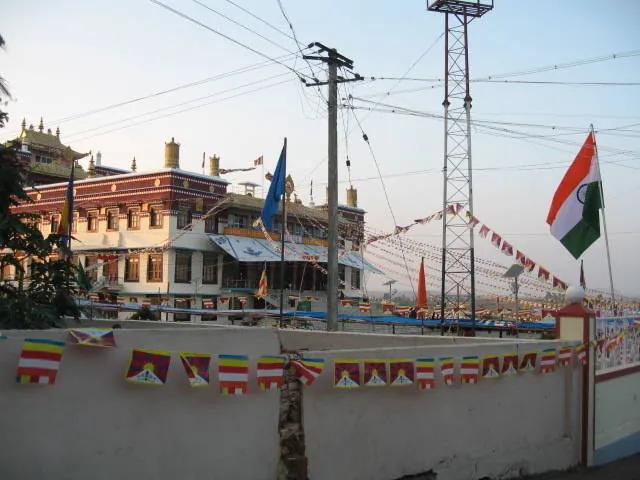
Every photograph on this site is a genuine image of Sera, Bylakuppe or Kopan, used under a free licence from Wikimedia Commons. No stock photography stands in for the monastery anywhere.
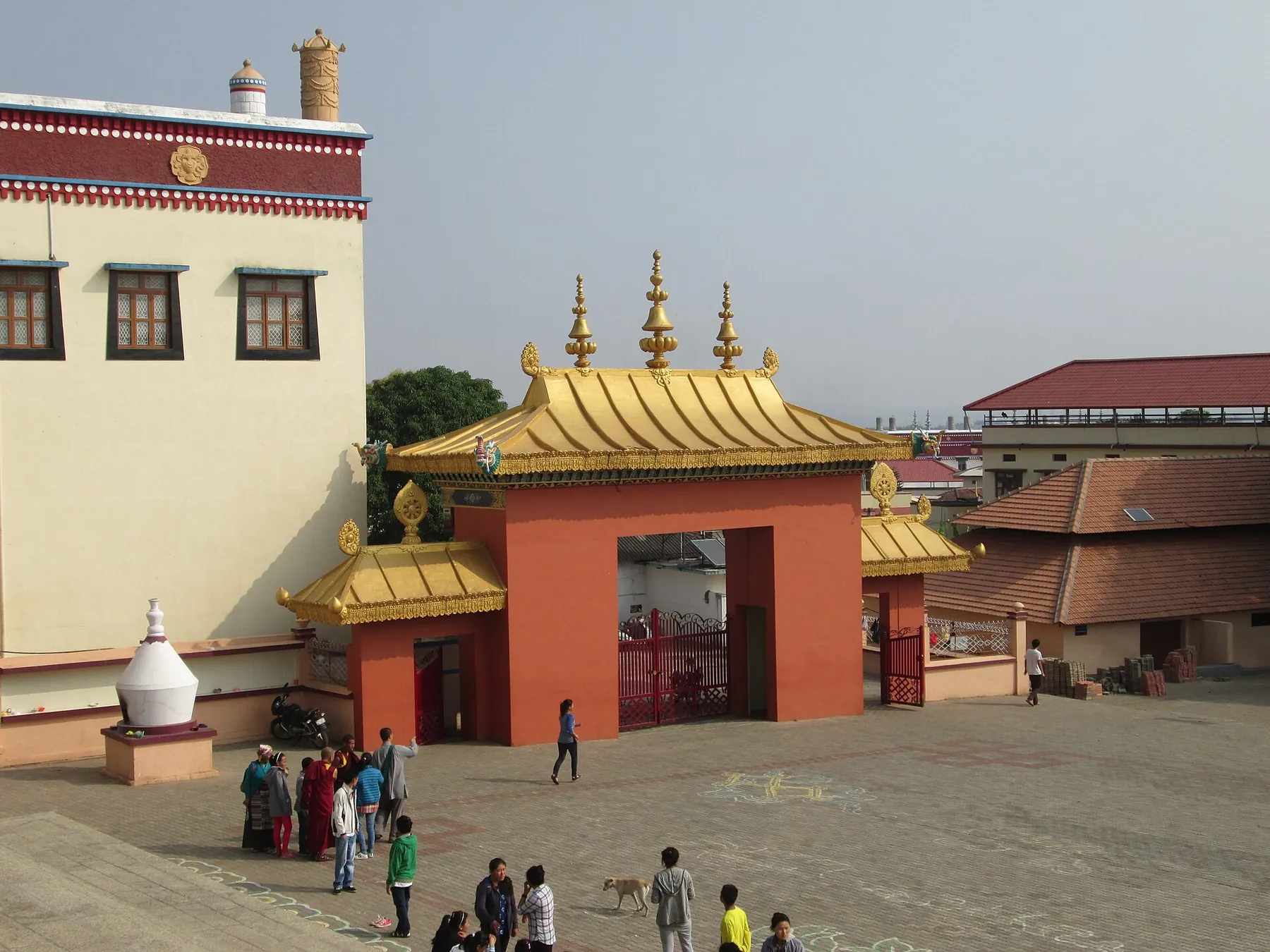
- Entrance Gate
Photograph by Ktoya · CC BY-SA 3.0 · Wikimedia Commons 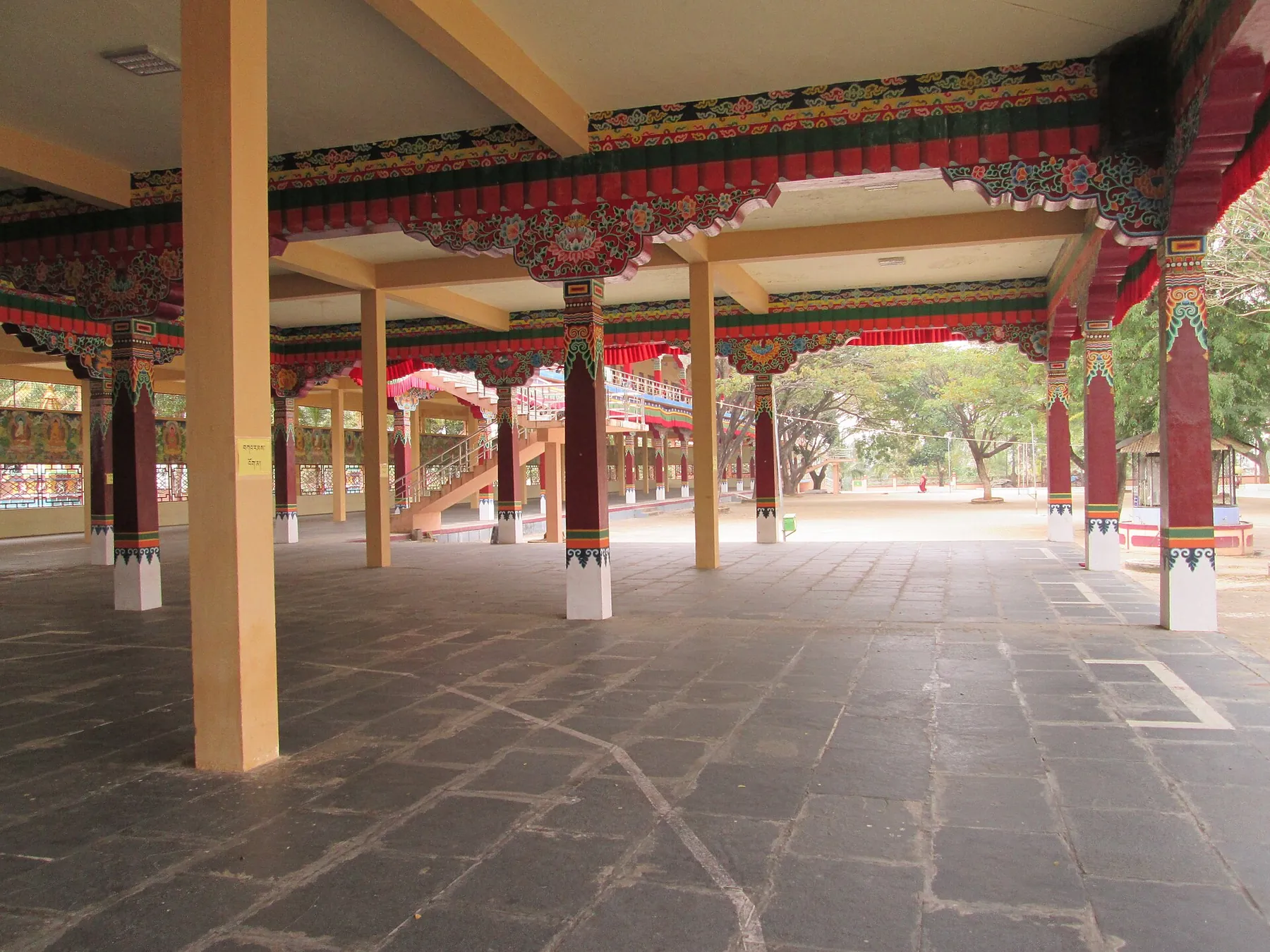
- Debate Hall
Photograph by Ktoya · CC BY-SA 3.0 · Wikimedia Commons 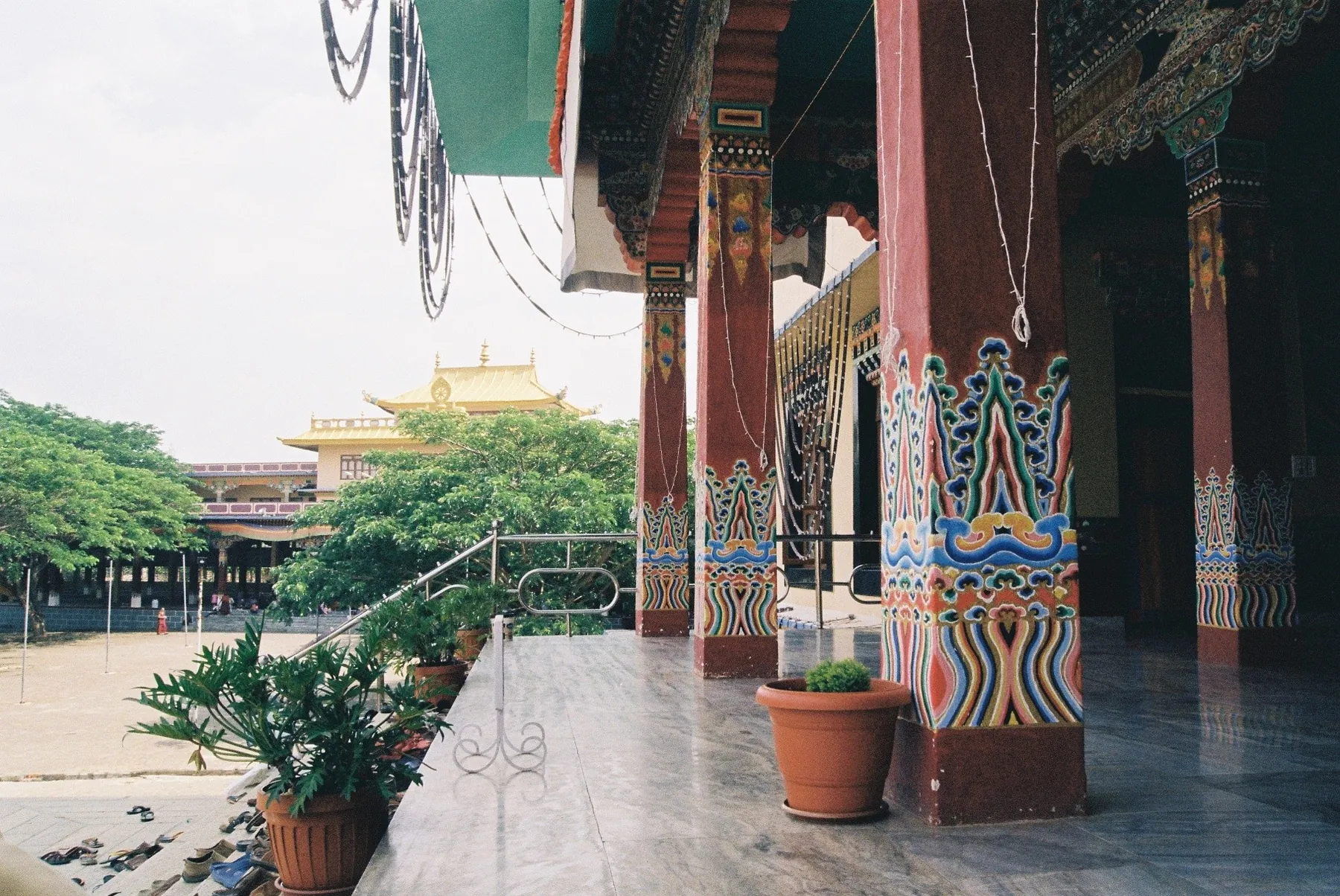
- Entrance Isabelnic
Photograph by isabelnic photography · CC0 · Wikimedia Commons 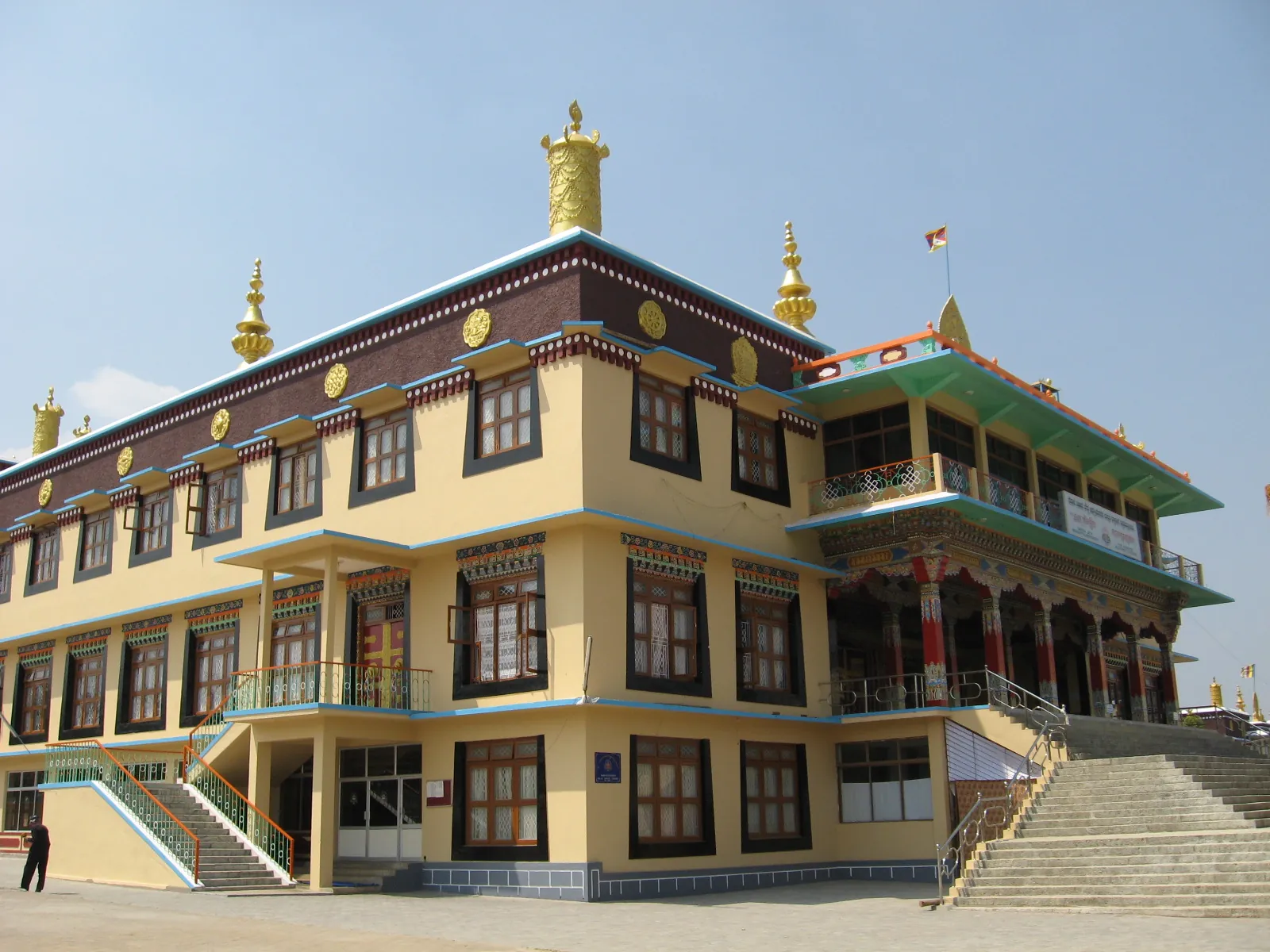
- Institute Sasha
Photograph by Sasha India · CC BY 2.0 · Wikimedia Commons 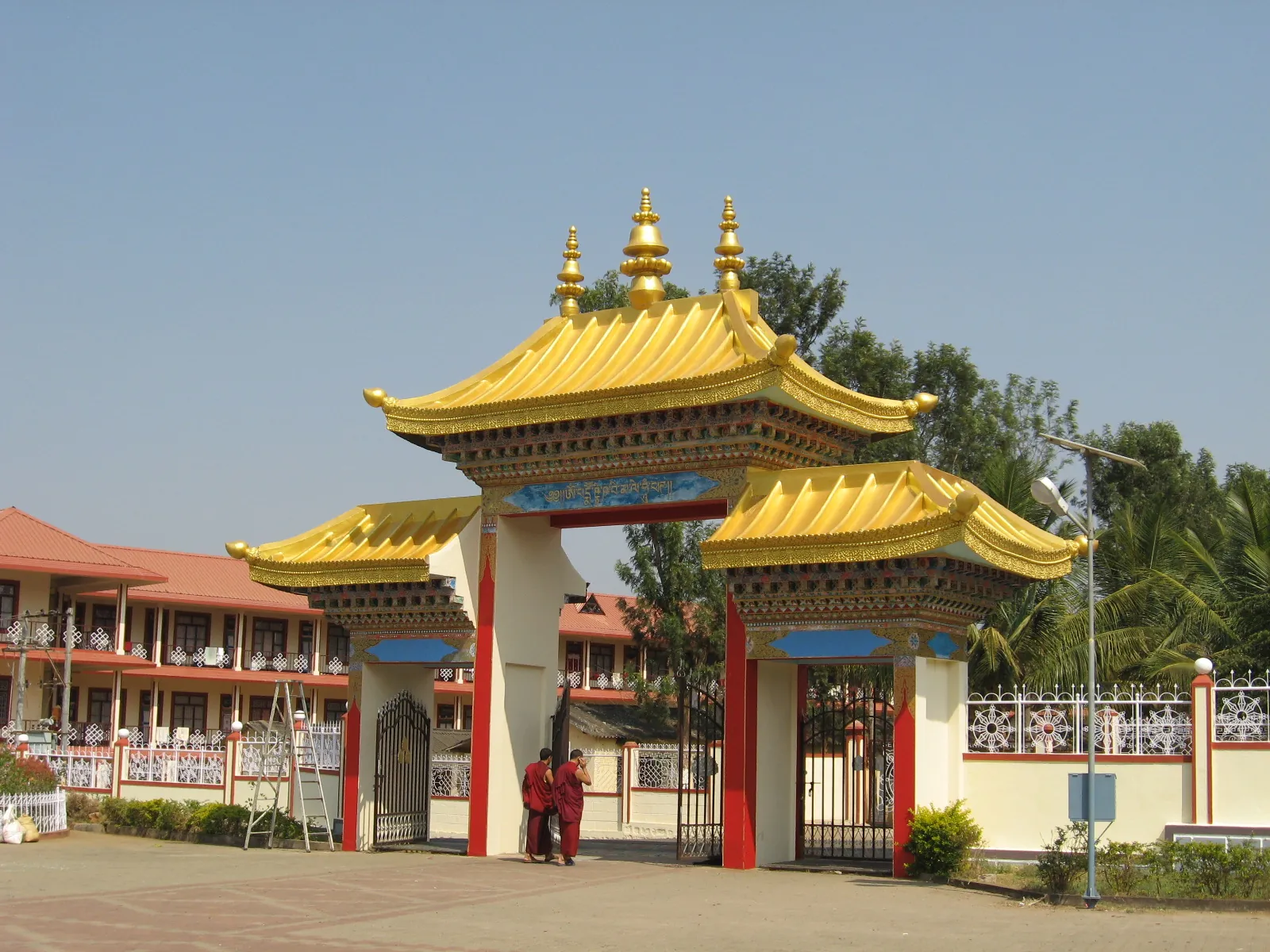
- Sera Complex
Photograph by Sasha India · CC BY 2.0 · Wikimedia Commons 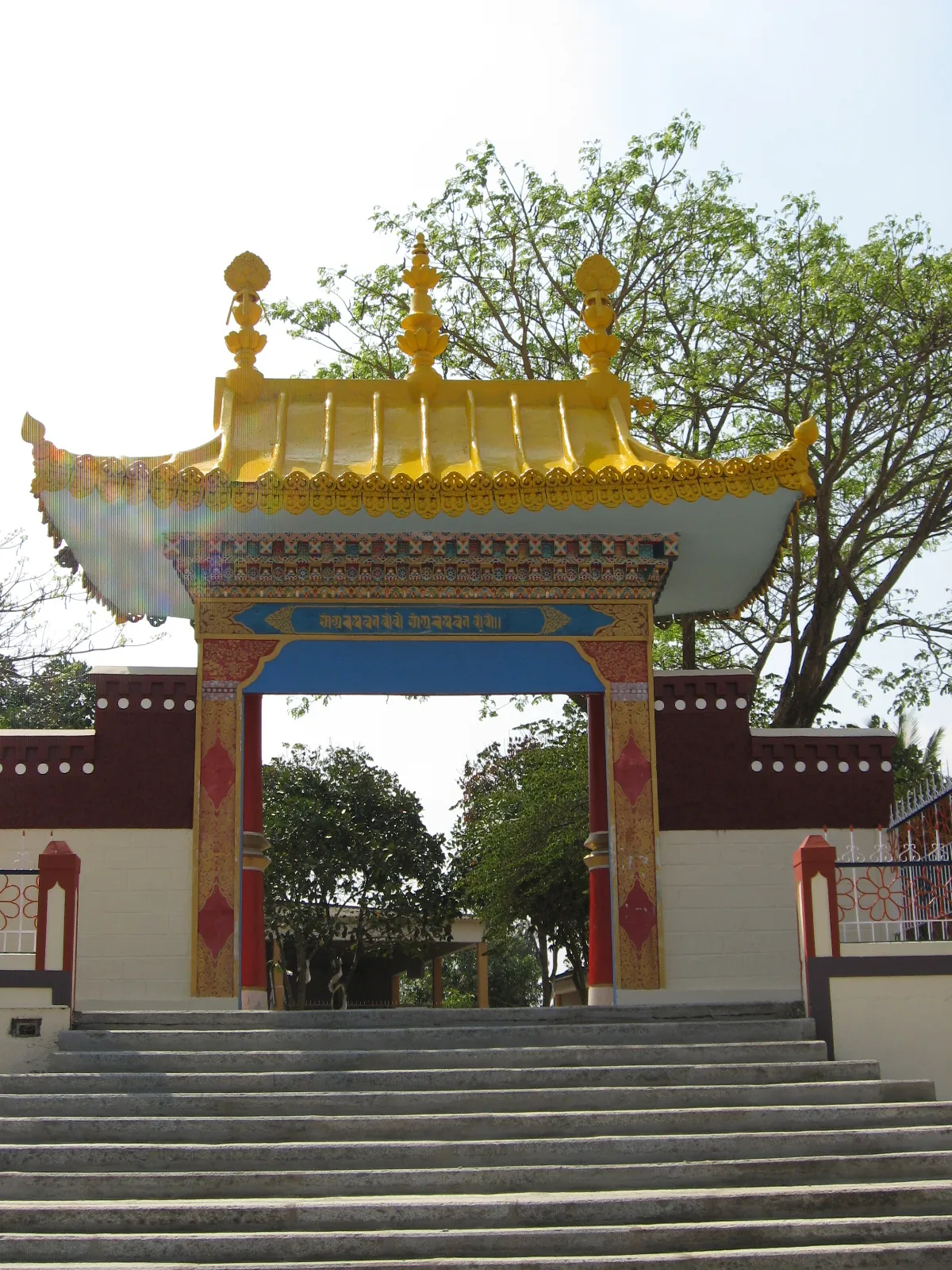
- Sera Gate
Photograph by Sasha India · CC BY 2.0 · Wikimedia Commons 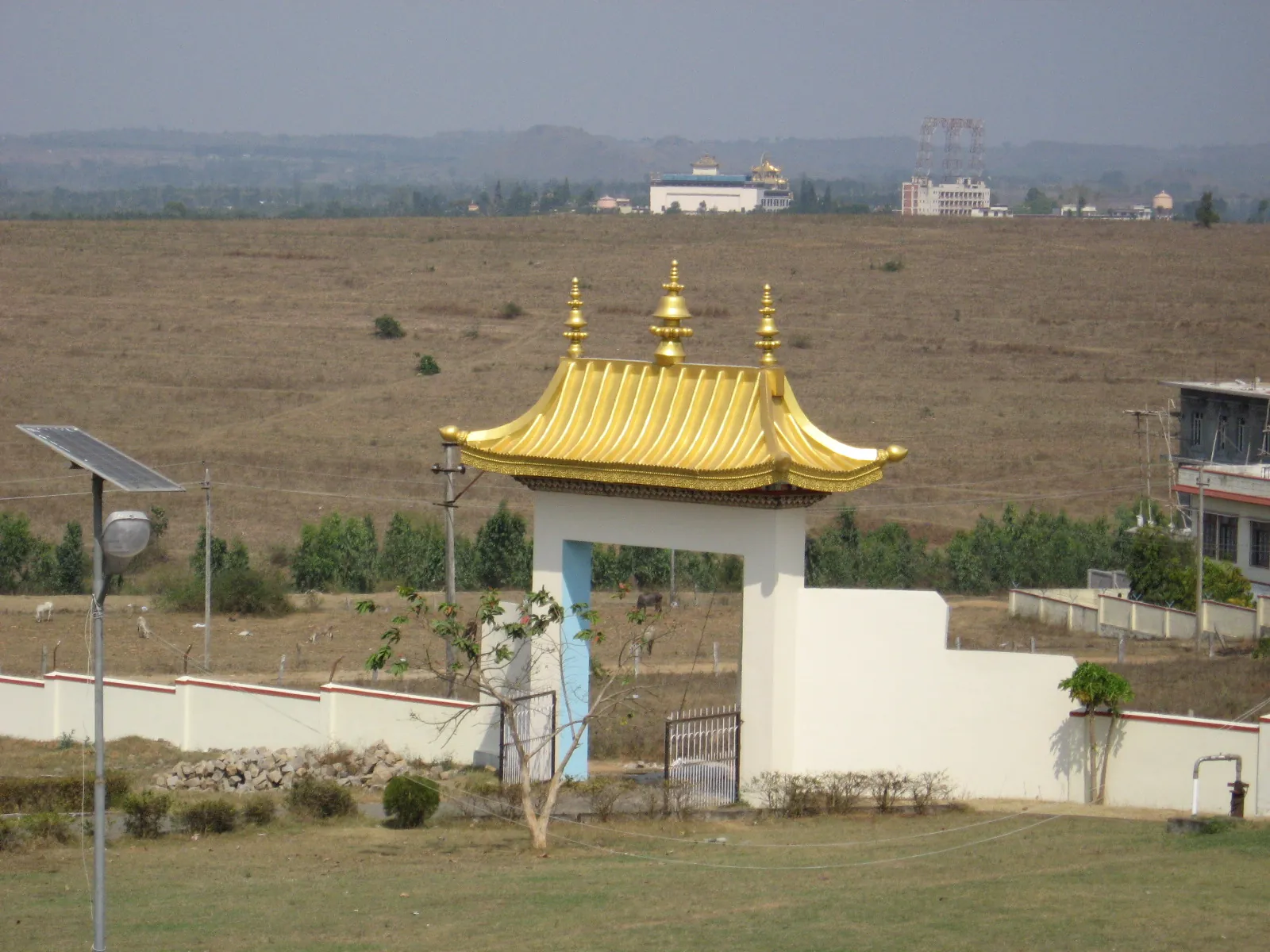
- Sera Courtyard
Photograph by Sasha India · CC BY 2.0 · Wikimedia Commons 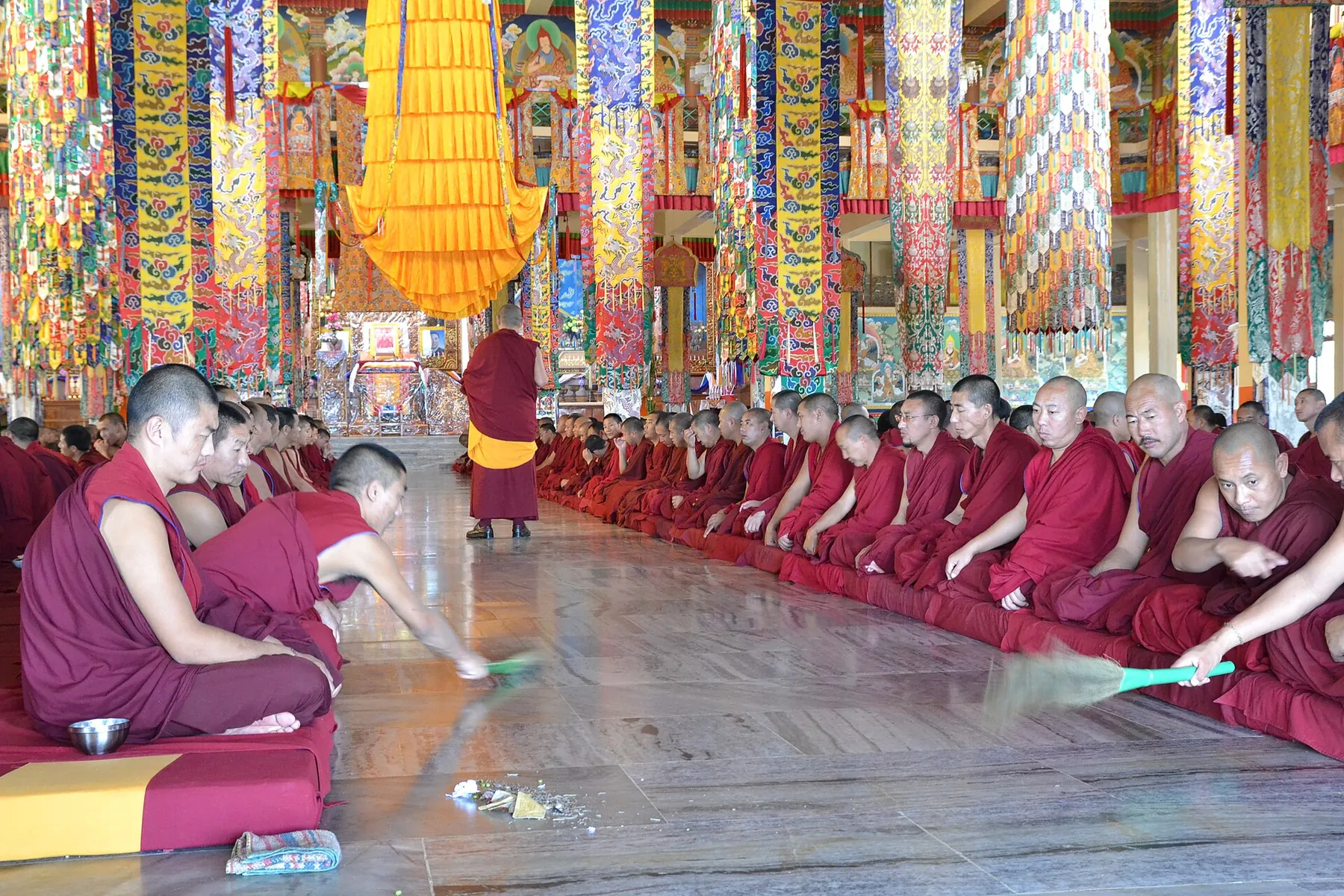
- Monks Interior
Photograph by Liv Unni Sødem · CC BY 2.0 · Wikimedia Commons 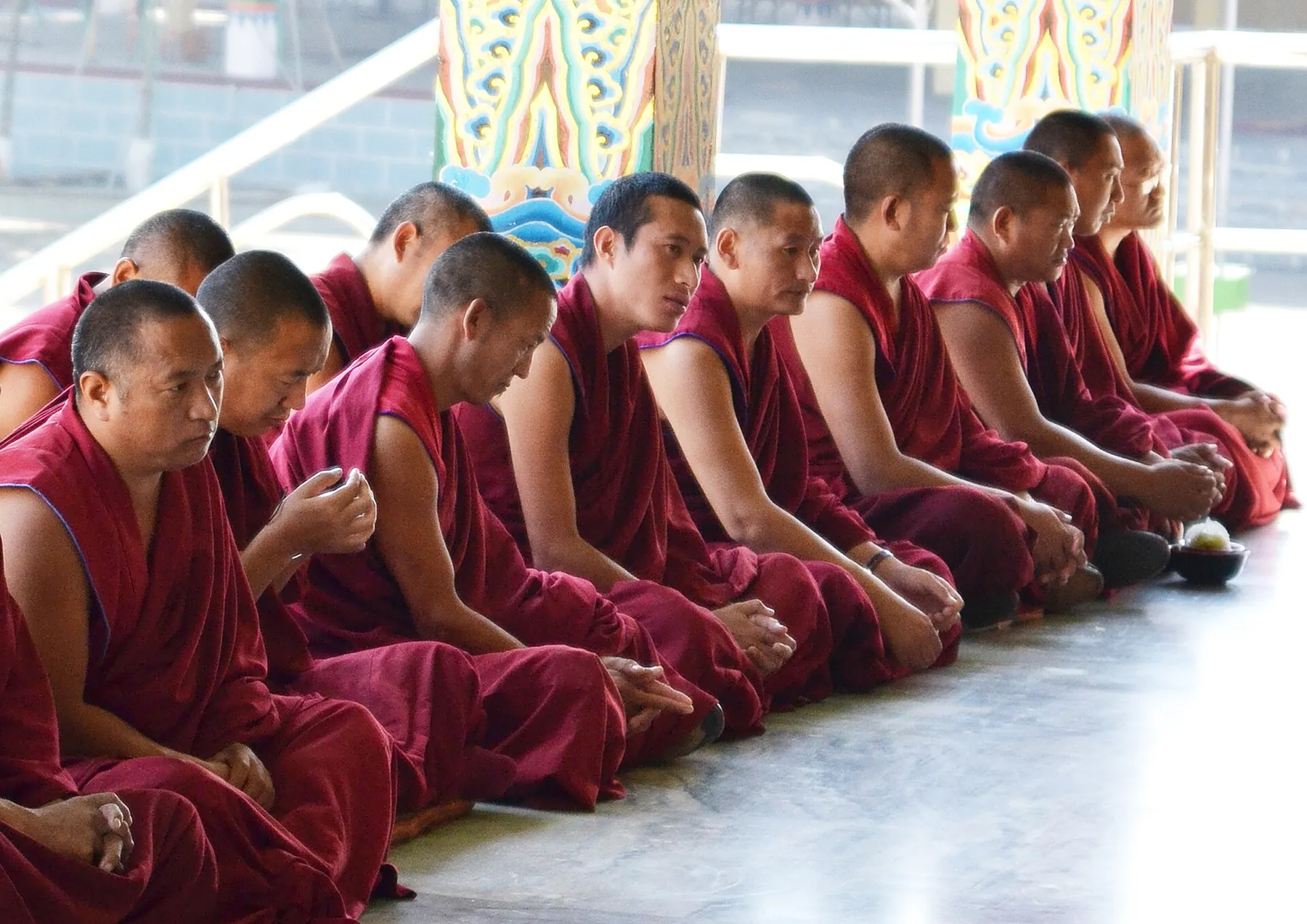
- Monks Group
Photograph by Liv Unni Sødem · CC BY 2.0 · Wikimedia Commons 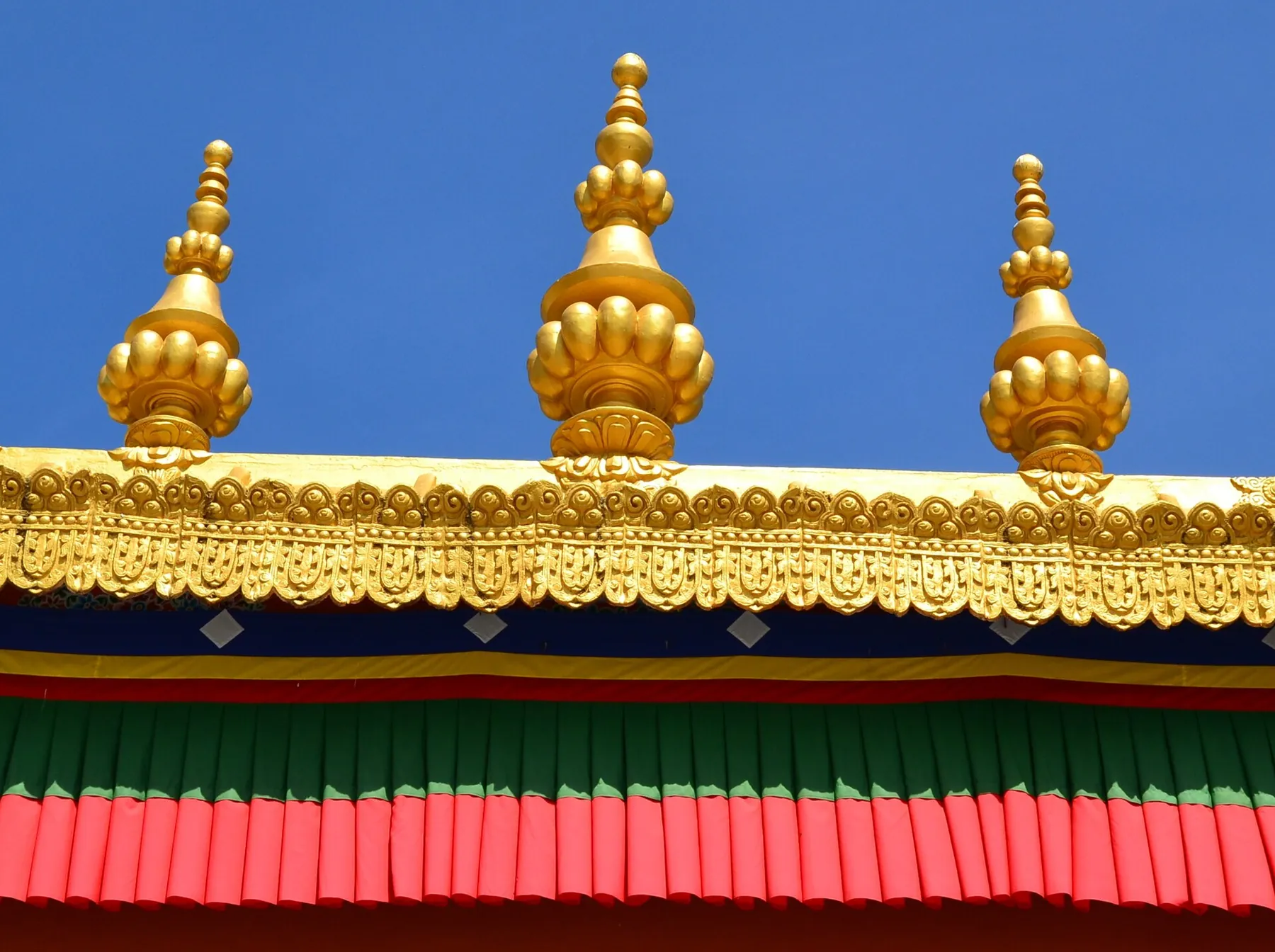
- Entrance Liv
Photograph by Liv Unni Sødem · CC BY 2.0 · Wikimedia Commons 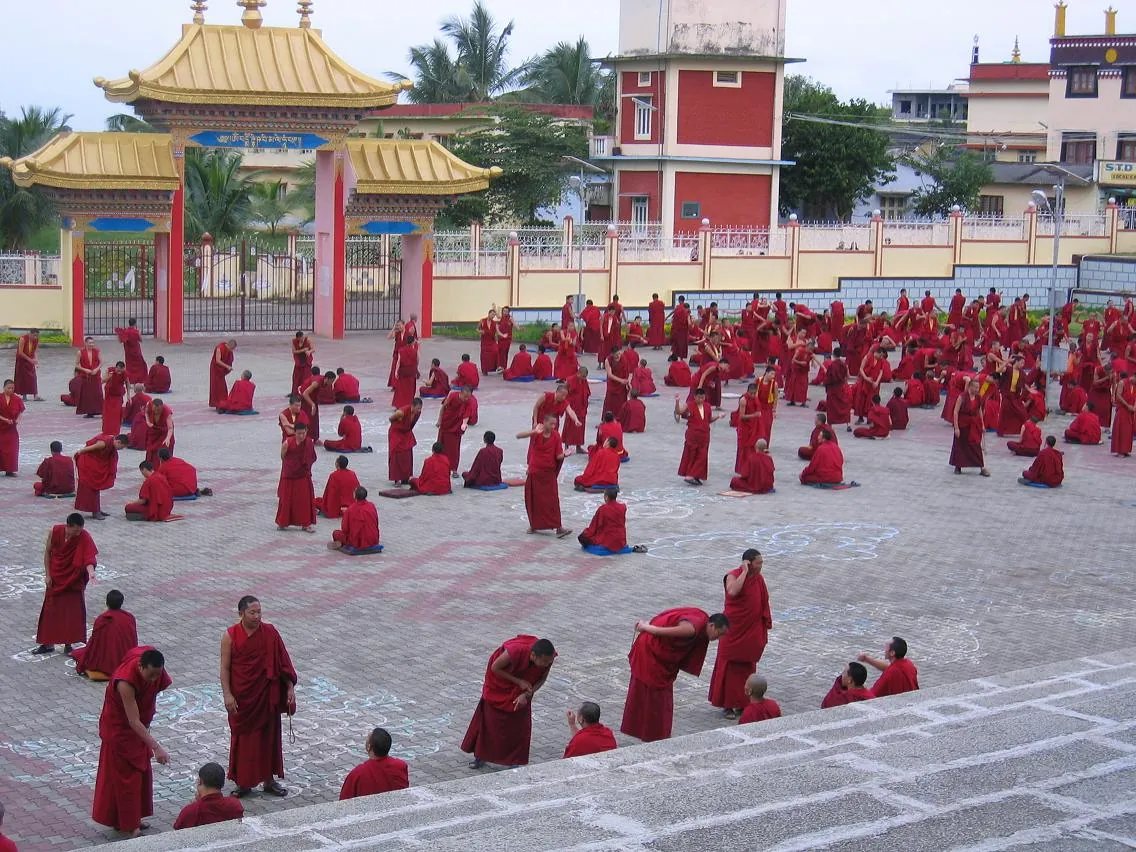
- Debate Square
Photograph by Evan Osherow · CC BY 2.0 · Wikimedia Commons 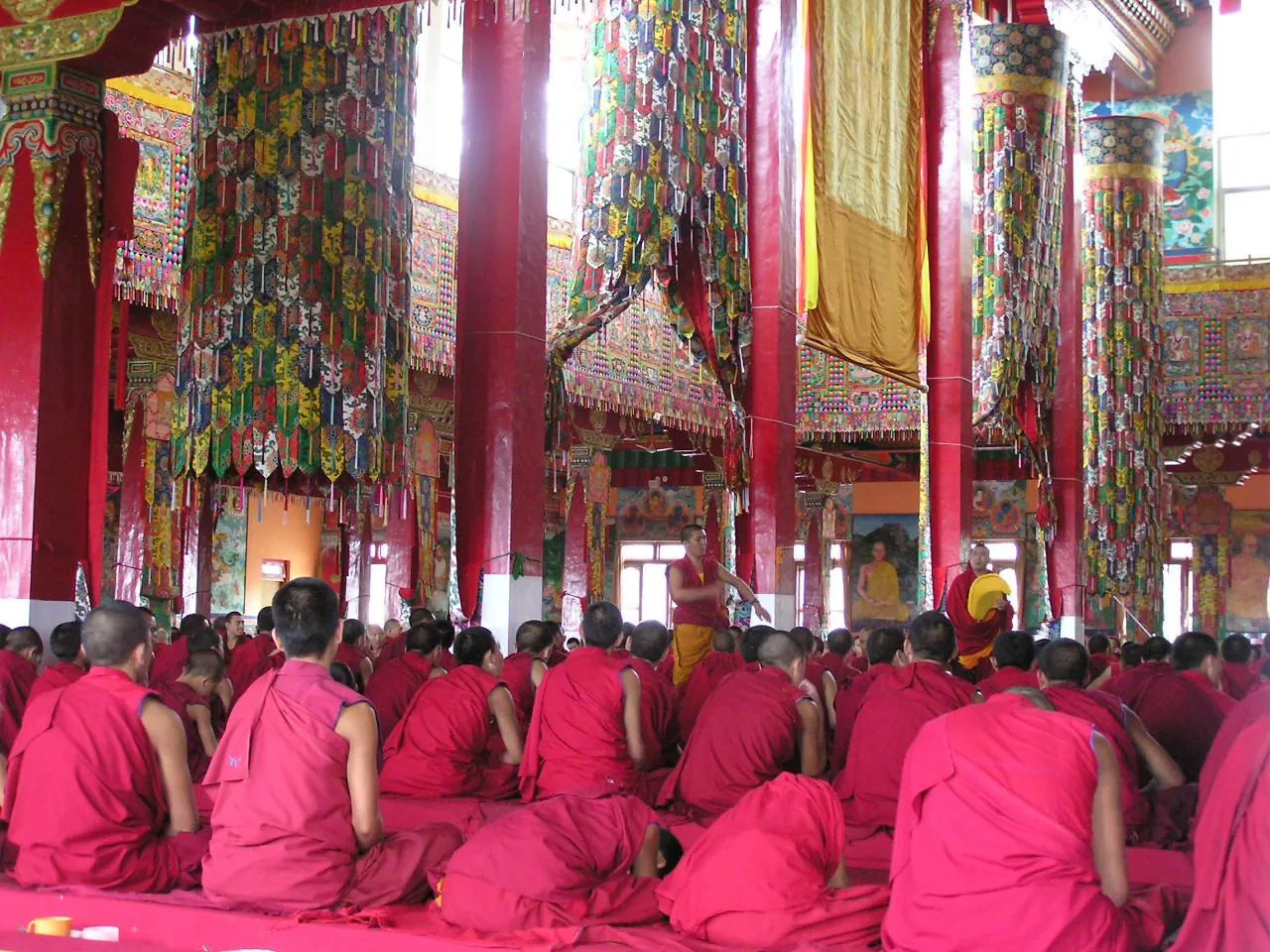
- Geshe Debate
Photograph by Evan Osherow · CC BY 2.0 · Wikimedia Commons - Sera Bylakuppe
Photograph by Tar-ba-gan · CC BY-SA 3.0 · Wikimedia Commons 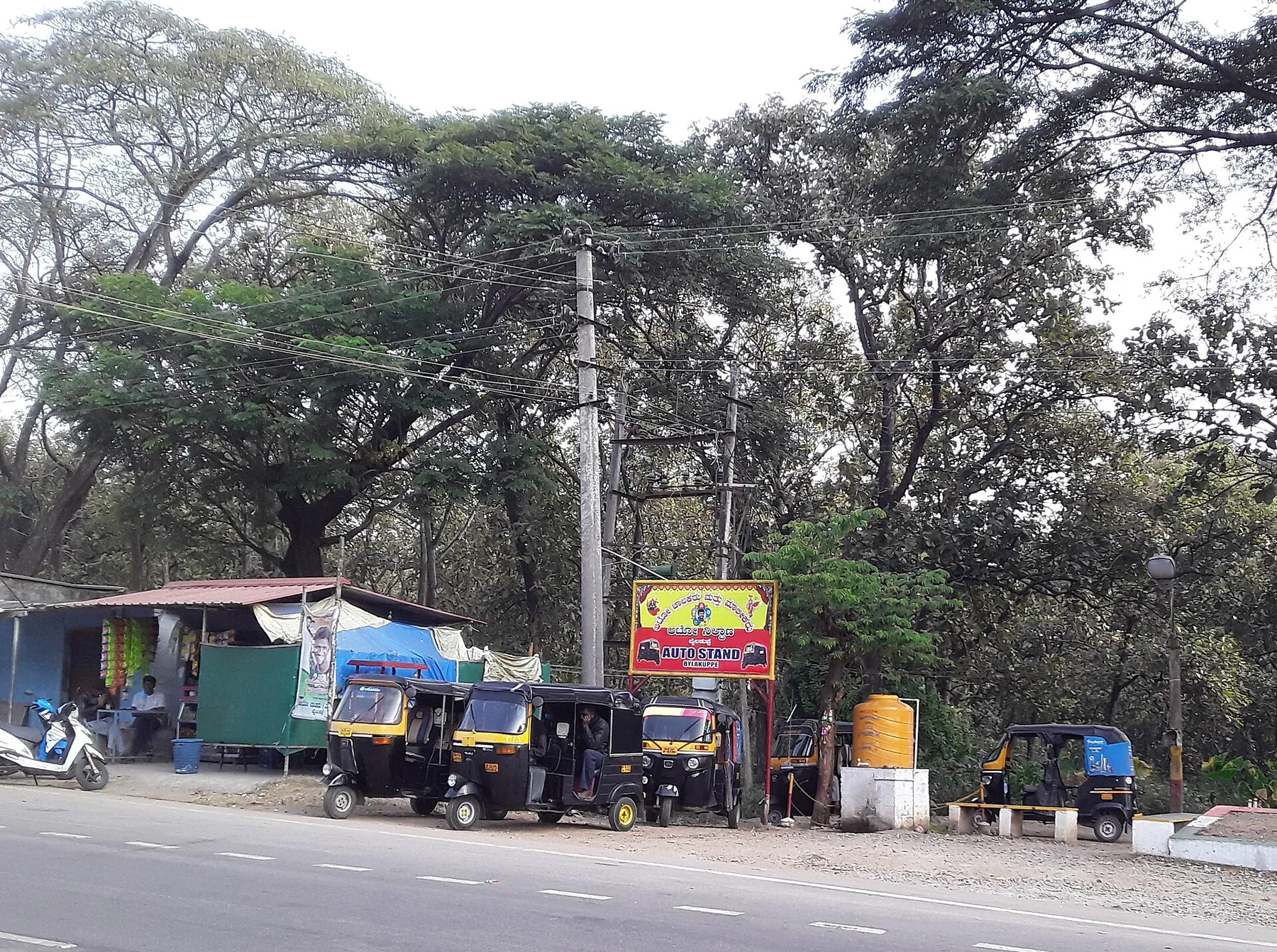
- Settlement
Photograph by Prof tpms · CC BY-SA 4.0 · Wikimedia Commons 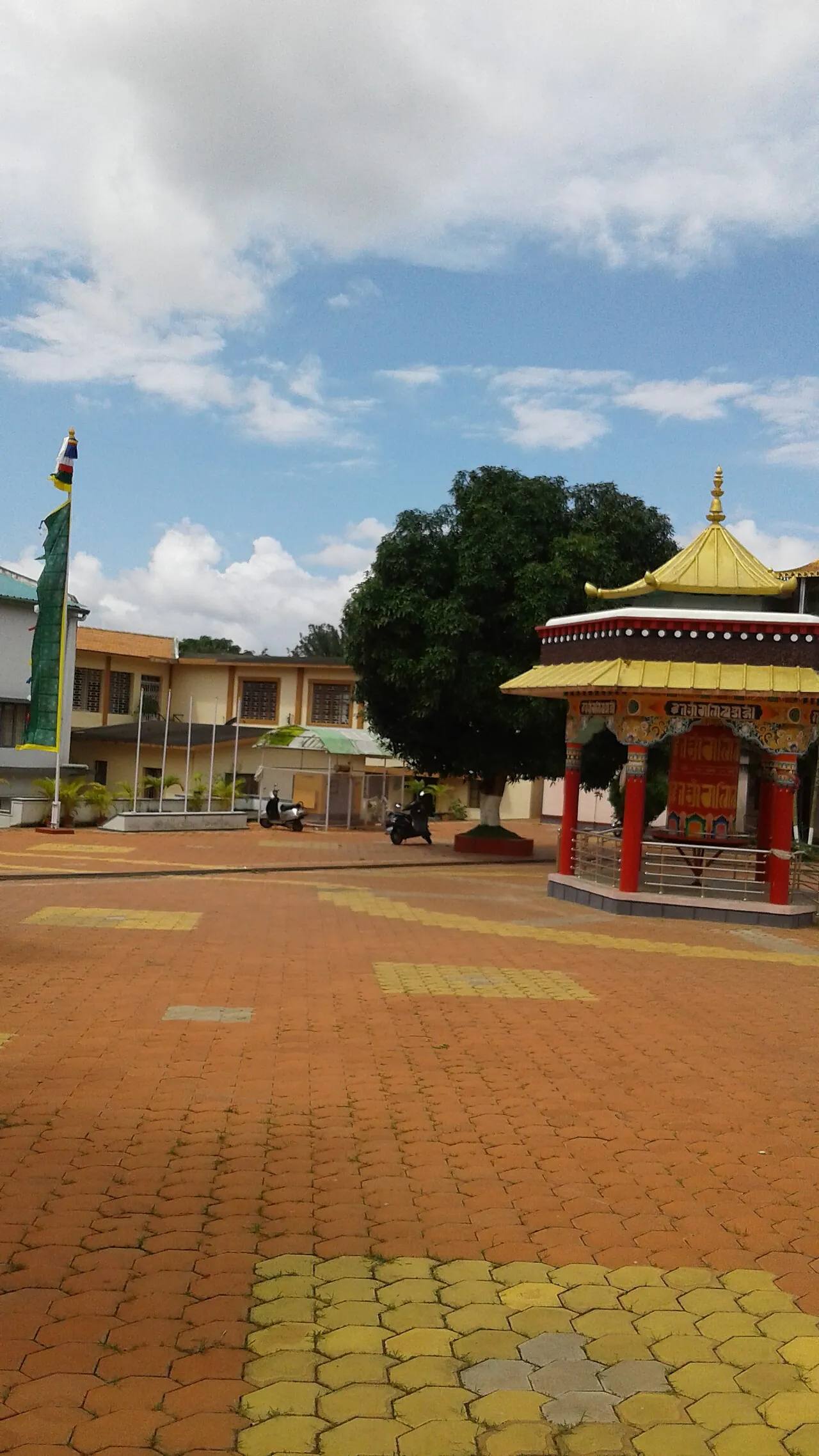
- Settlement 2
Photograph by Prof tpms · CC BY-SA 4.0 · Wikimedia Commons 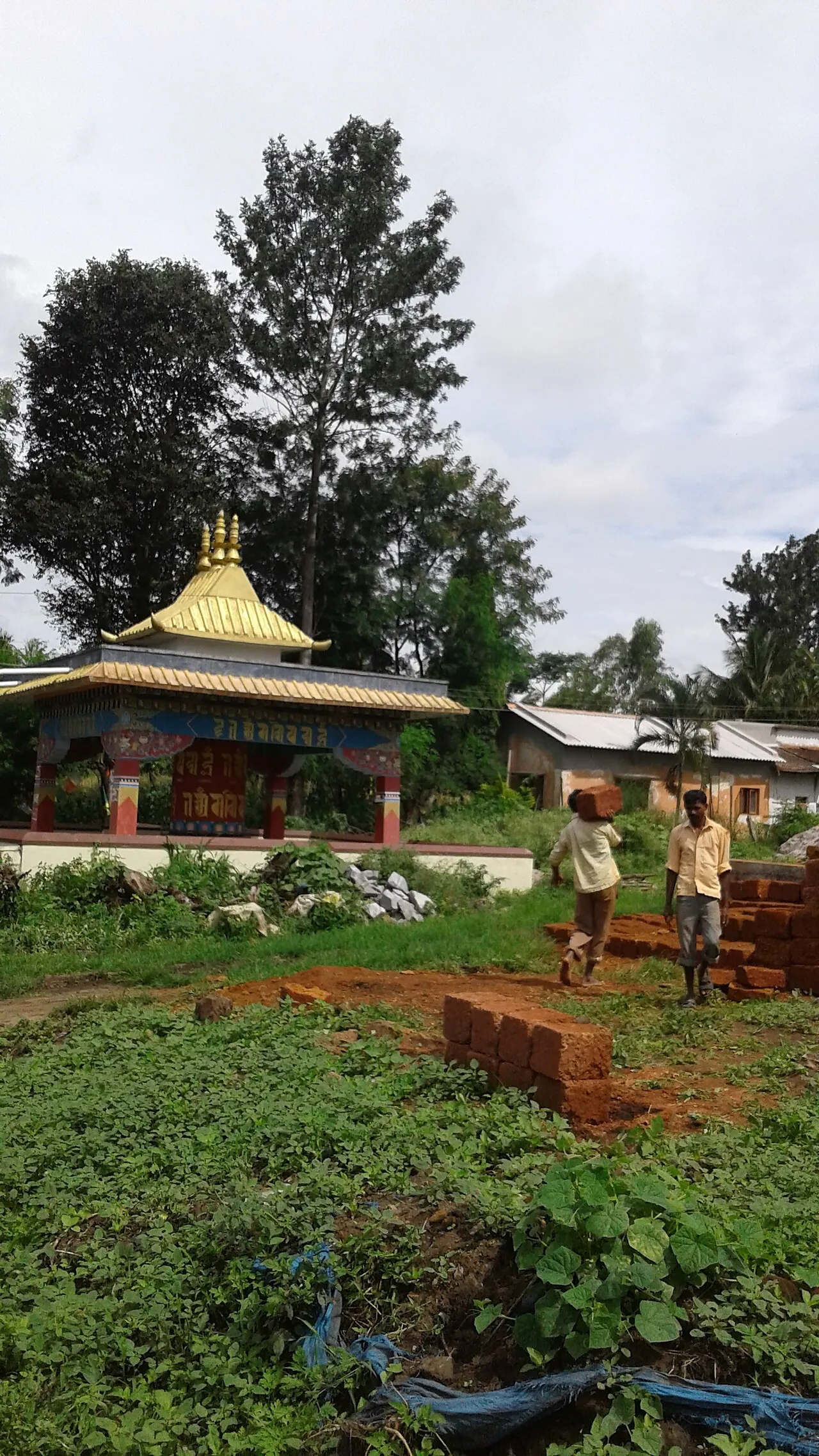
- Settlement 3
Photograph by Prof tpms · CC BY-SA 4.0 · Wikimedia Commons 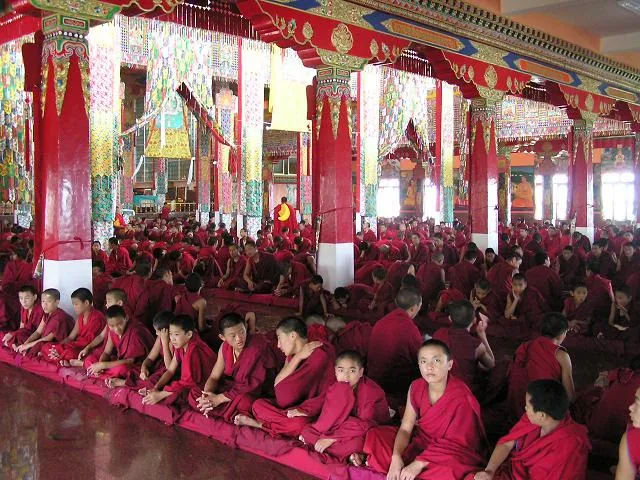
- Monks Temple
Photograph by evanosherow · CC BY 2.0 · Wikimedia Commons 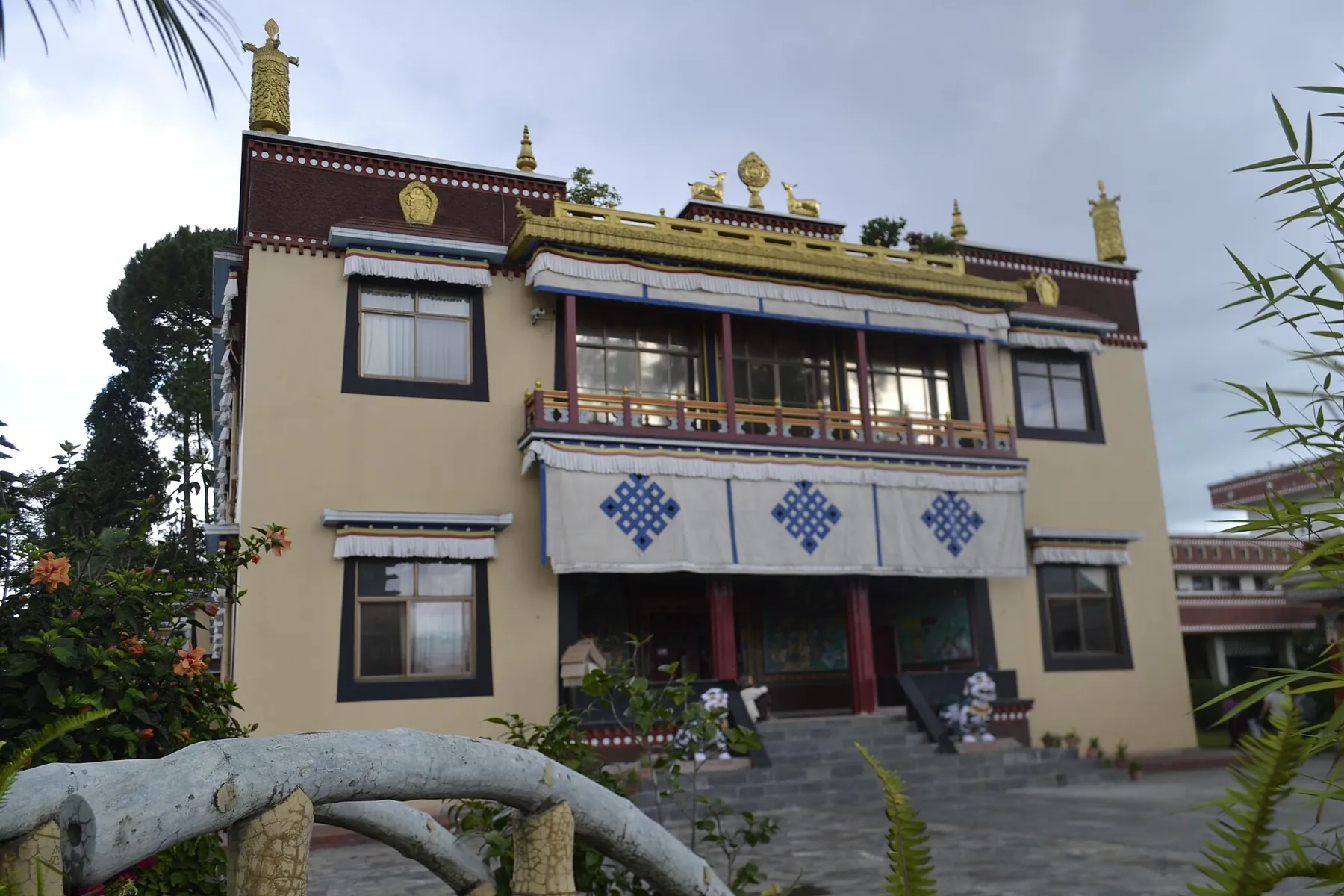
- Kopan Hero
Photograph by Batu · CC BY-SA 4.0 · Wikimedia Commons 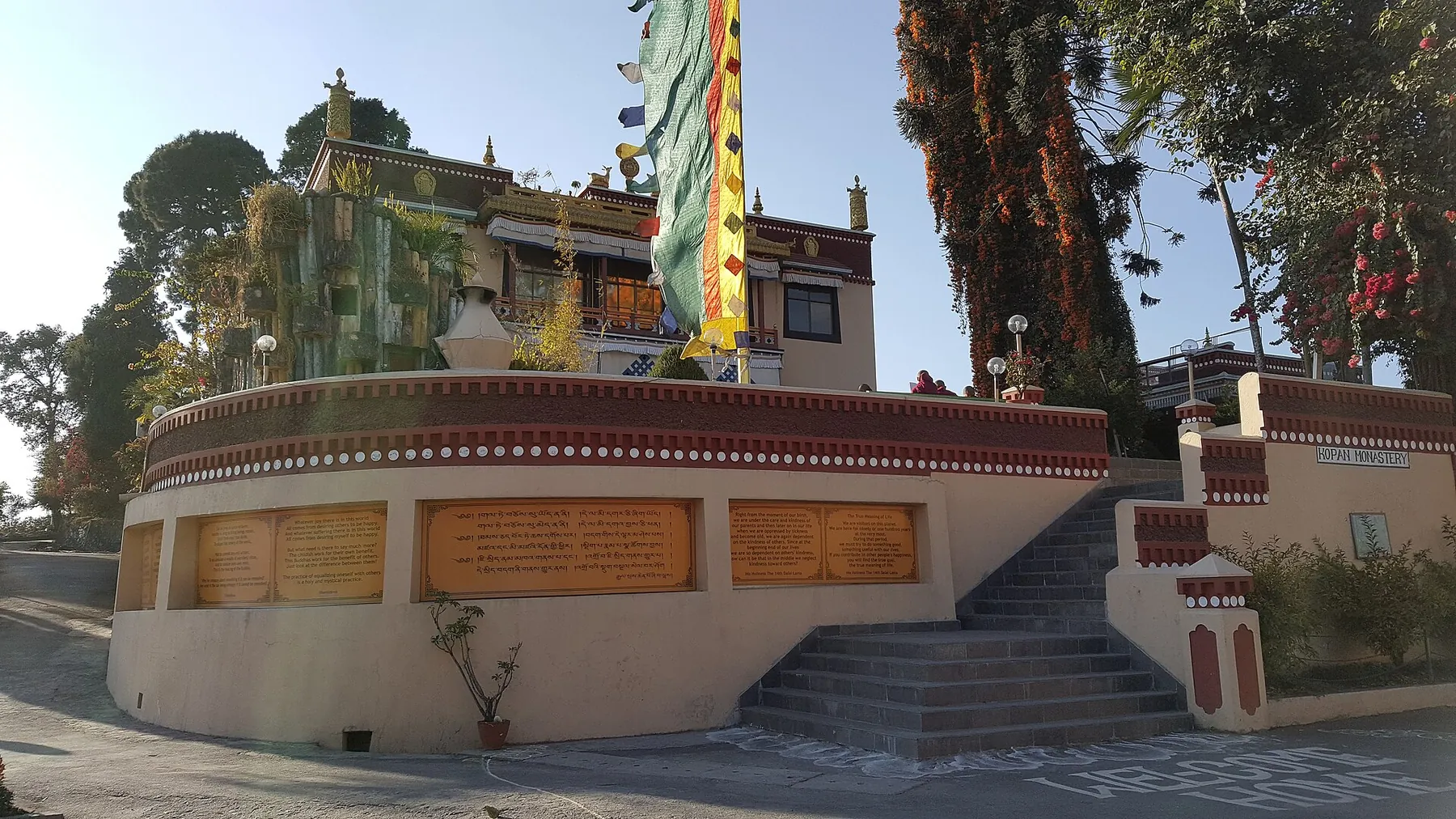
- Kopan Grounds
Photograph by Gisela Giardino from Buenos Aires, Argentina · CC BY-SA 2.0 · Wikimedia Commons 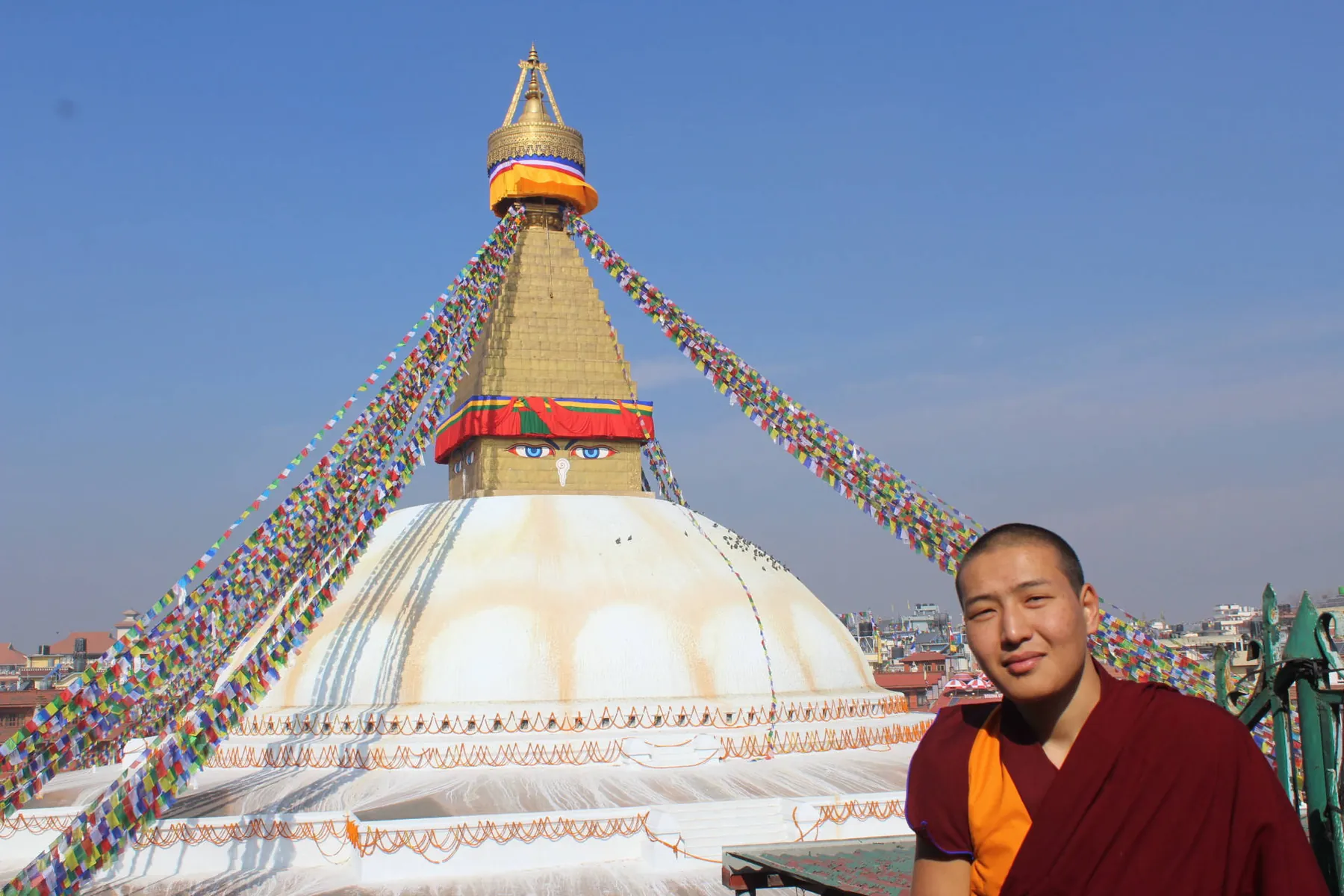
- Darpa Boudhanath
Photograph by Photographer not recorded · Supplied by the author · Wikimedia Commons 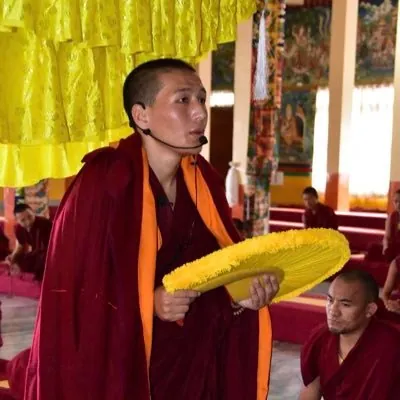
- Darpa Teaching
Photograph by His own profile photograph on x.com/DarpaPandita · Used by permission of the author · Wikimedia Commons
Illustration
The Courtyard artwork
The ten pieces in The Courtyard are headed by illustrations, not photographs. They were generated with an image model and commissioned for this site. They are there to set a mood, and they are the only images here that are not records of a real place.
Read them as drawings. None of them depicts a real person, a real building, or an event as it actually looked. This matters most for the piece on the re-establishment of 1970, whose illustration is an impression of what clearing and building looked like in that decade, not a document of it. The facts in each piece are sourced separately, and the sources are listed at the foot of the piece.
- A hill monastery terrace at dawn above a valley of cloud
Generated illustration · made for this site · The Courtyard: kopan 
- A desk of unfinished admin under a single lamp
Generated illustration · made for this site · The Courtyard: leaving 
- A butter lamp beside cloth-wrapped scripture
Generated illustration · made for this site · The Courtyard: tsongkhapa 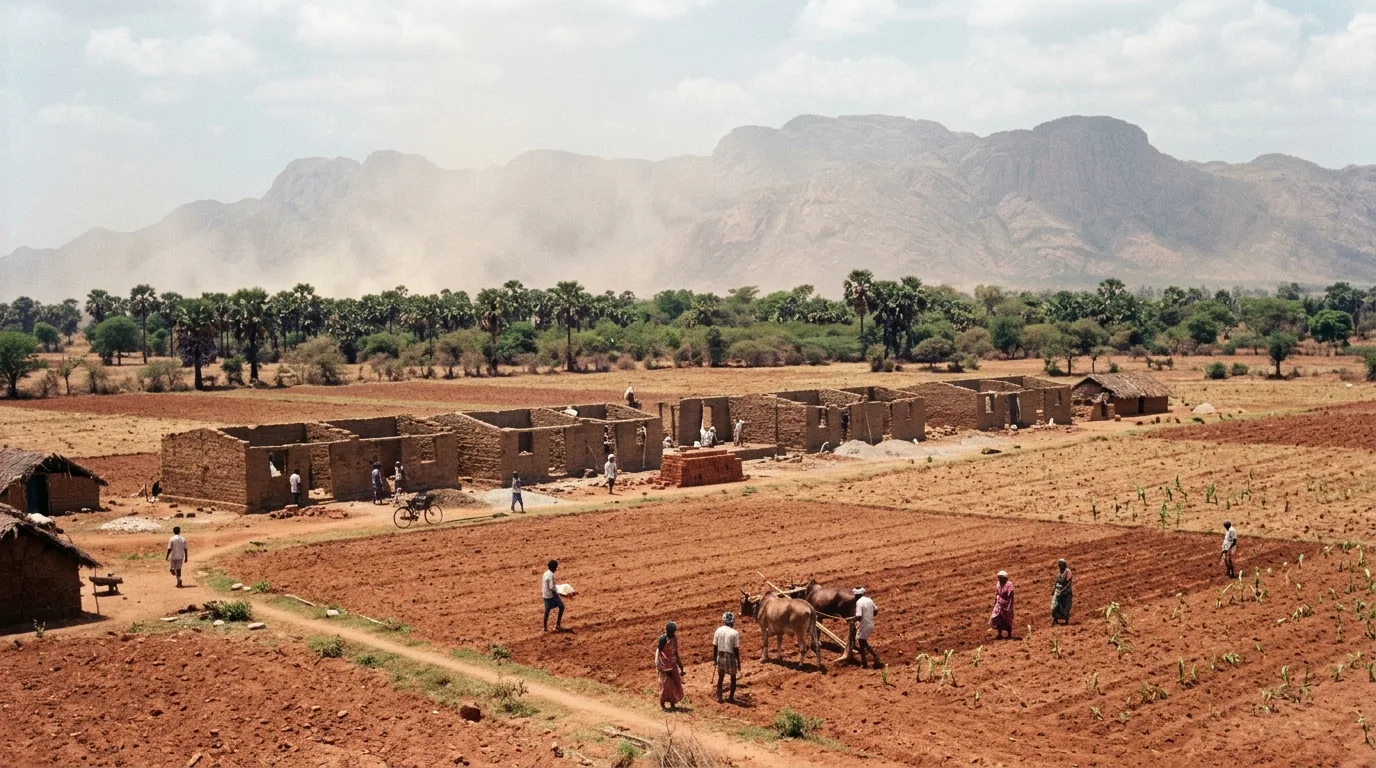
- Half-built brick shells and freshly ploughed red earth
Generated illustration · made for this site · The Courtyard: 1970 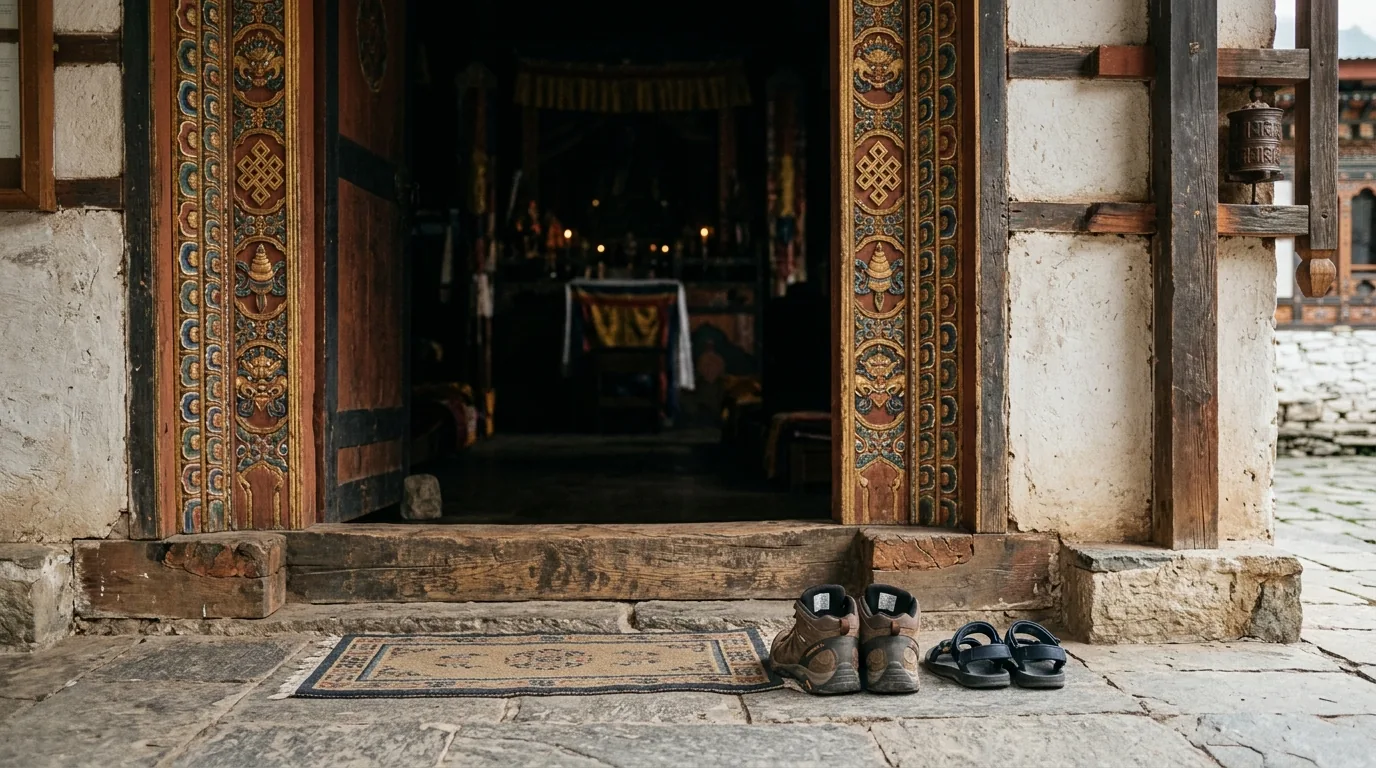
- Shoes left outside a painted monastery doorway
Generated illustration · made for this site · The Courtyard: visiting-well 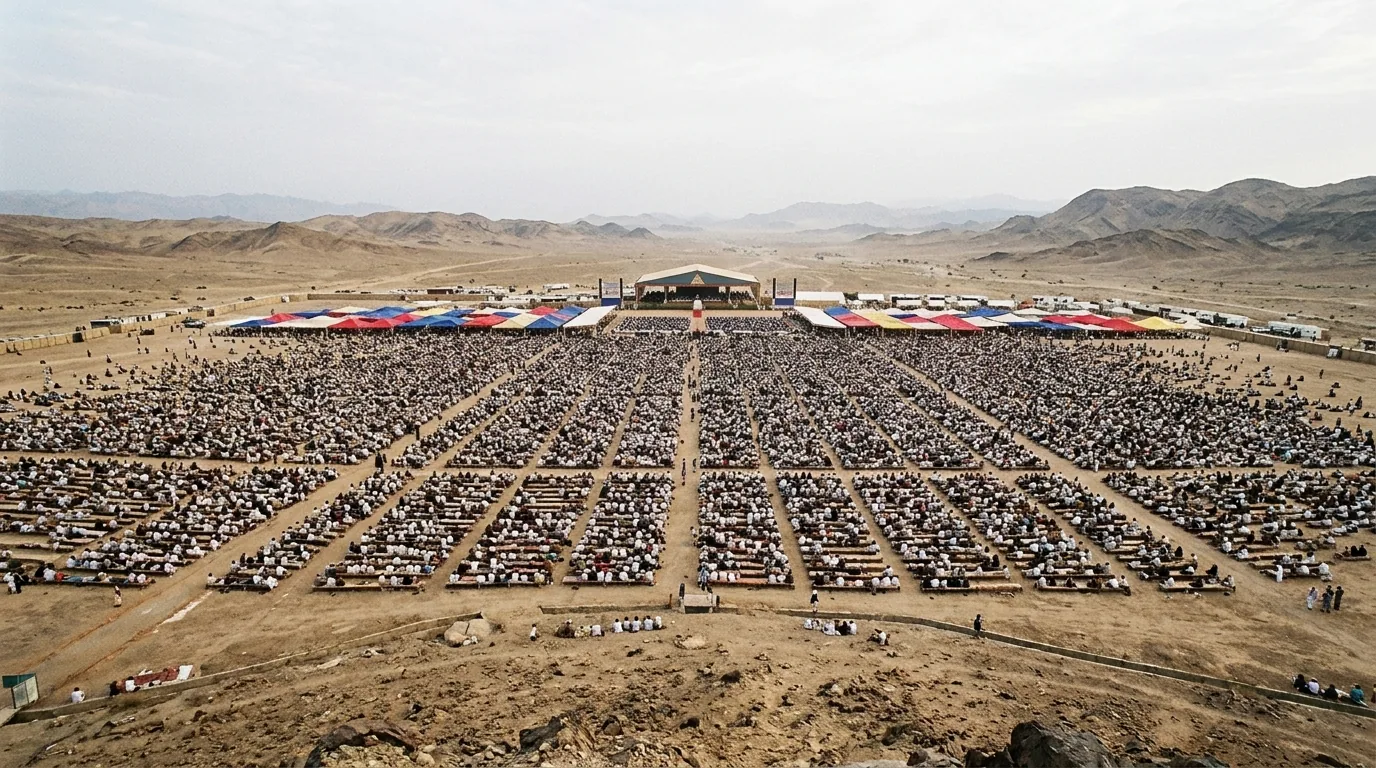
- A vast seated gathering on a dusty plain
Generated illustration · made for this site · The Courtyard: kalachakra 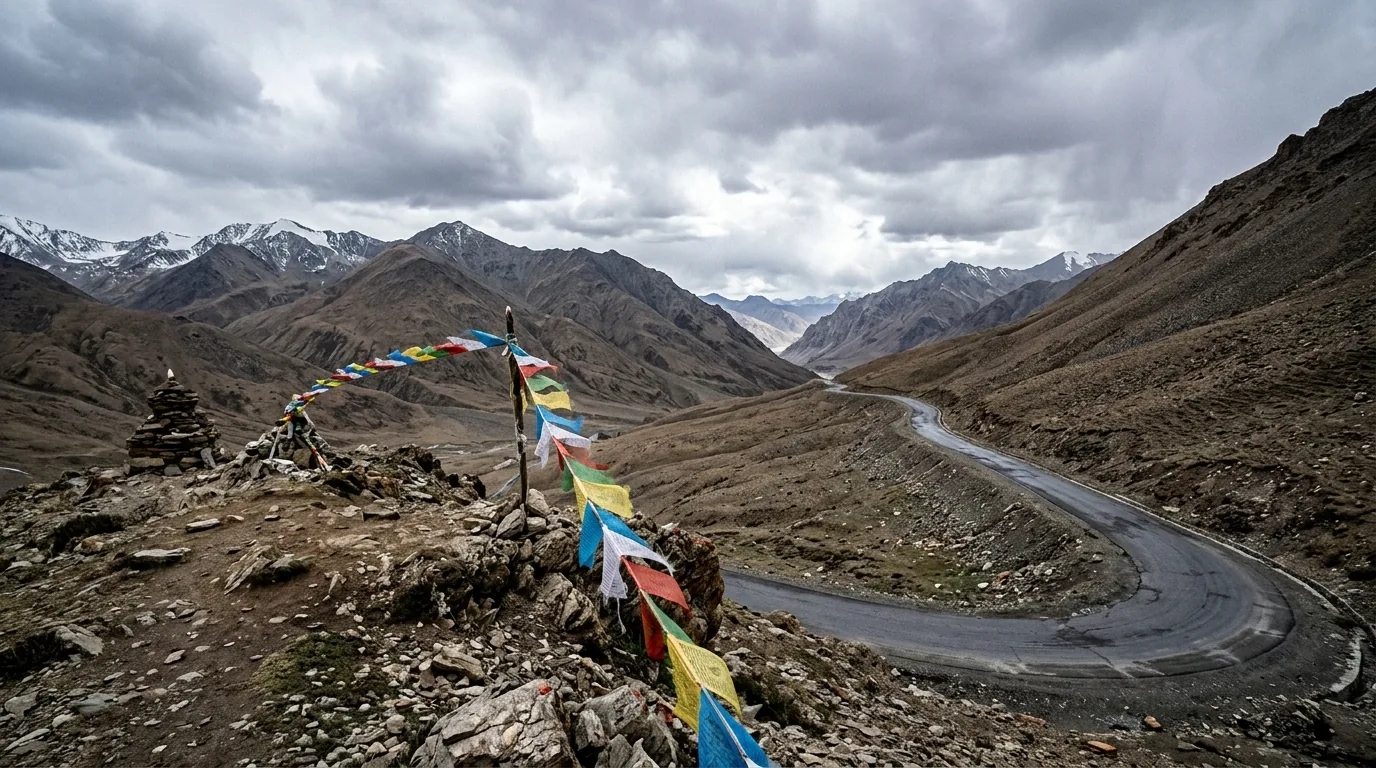
- An empty road through a high mountain valley
Generated illustration · made for this site · The Courtyard: return
Portraits
The Dalai Lamas
Thangka paintings, murals and photographs from Wikimedia Commons, all public domain or freely licensed. The early likenesses are devotional images rather than portraits taken from life.
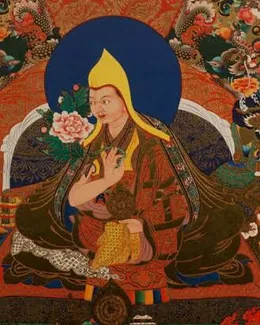
- 1st Dalai Lama
Unknown artist · Public domain · Wikimedia Commons 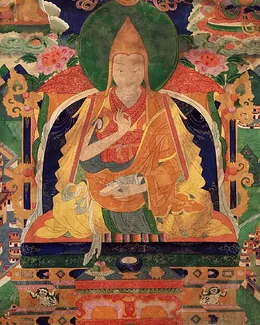
- 2nd Dalai Lama
www.treasuryoflives.org · Public domain · Wikimedia Commons 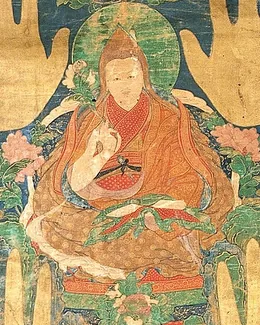
- 3rd Dalai Lama
Unknown tibetan artist. · CC BY-SA 4.0 · Wikimedia Commons 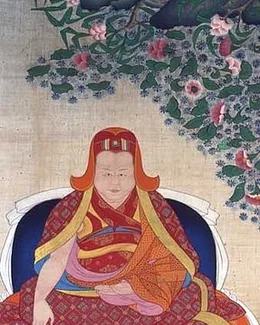
- 4th Dalai Lama
Unknown artist · CC BY-SA 4.0 · Wikimedia Commons 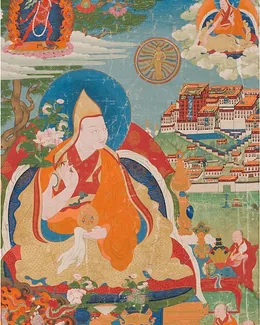
- 5th Dalai Lama
Unknown artist · Public domain · Wikimedia Commons 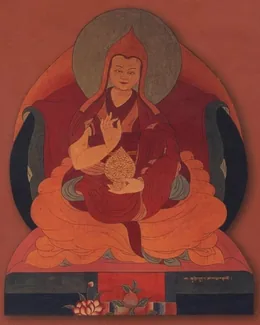
- 6th Dalai Lama
http://www.geocities.com/Athens/Ithaca/4886 · Public domain · Wikimedia Commons 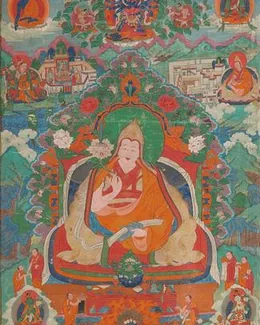
- 7th Dalai Lama
Musée Guimet · Public domain · Wikimedia Commons 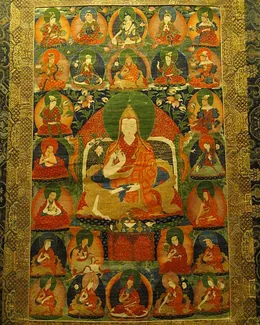
- 8th Dalai Lama
Daderot · CC0 · Wikimedia Commons 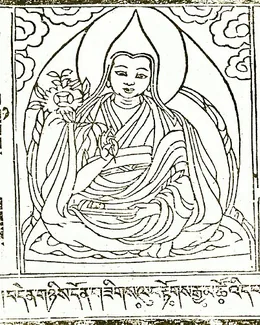
- 9th Dalai Lama
Unknown artist · Public domain · Wikimedia Commons 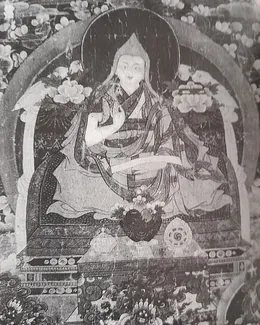
- 10th Dalai Lama
Unknown artist · Public domain · Wikimedia Commons 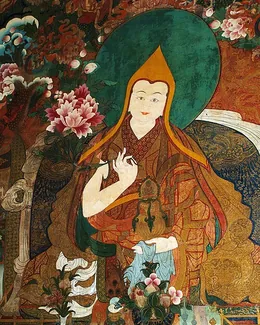
- 11th Dalai Lama
Unknown artist · Public domain · Wikimedia Commons 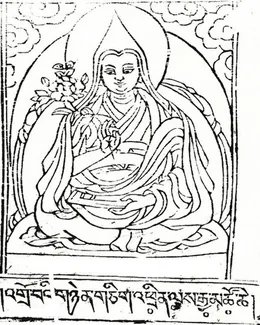
- 12th Dalai Lama
Unknown artist · Public domain · Wikimedia Commons 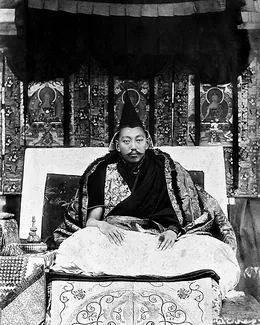
- 13th Dalai Lama
M. Sain, Darjeeling · Public domain · Wikimedia Commons 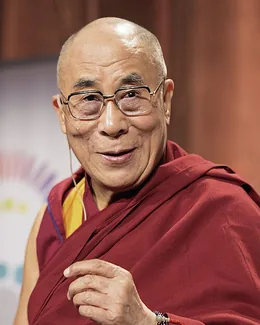
- 14th Dalai Lama
Christopher Michel · CC BY-SA 4.0 · Wikimedia Commons