11 · Visit
Finding Sera Jey
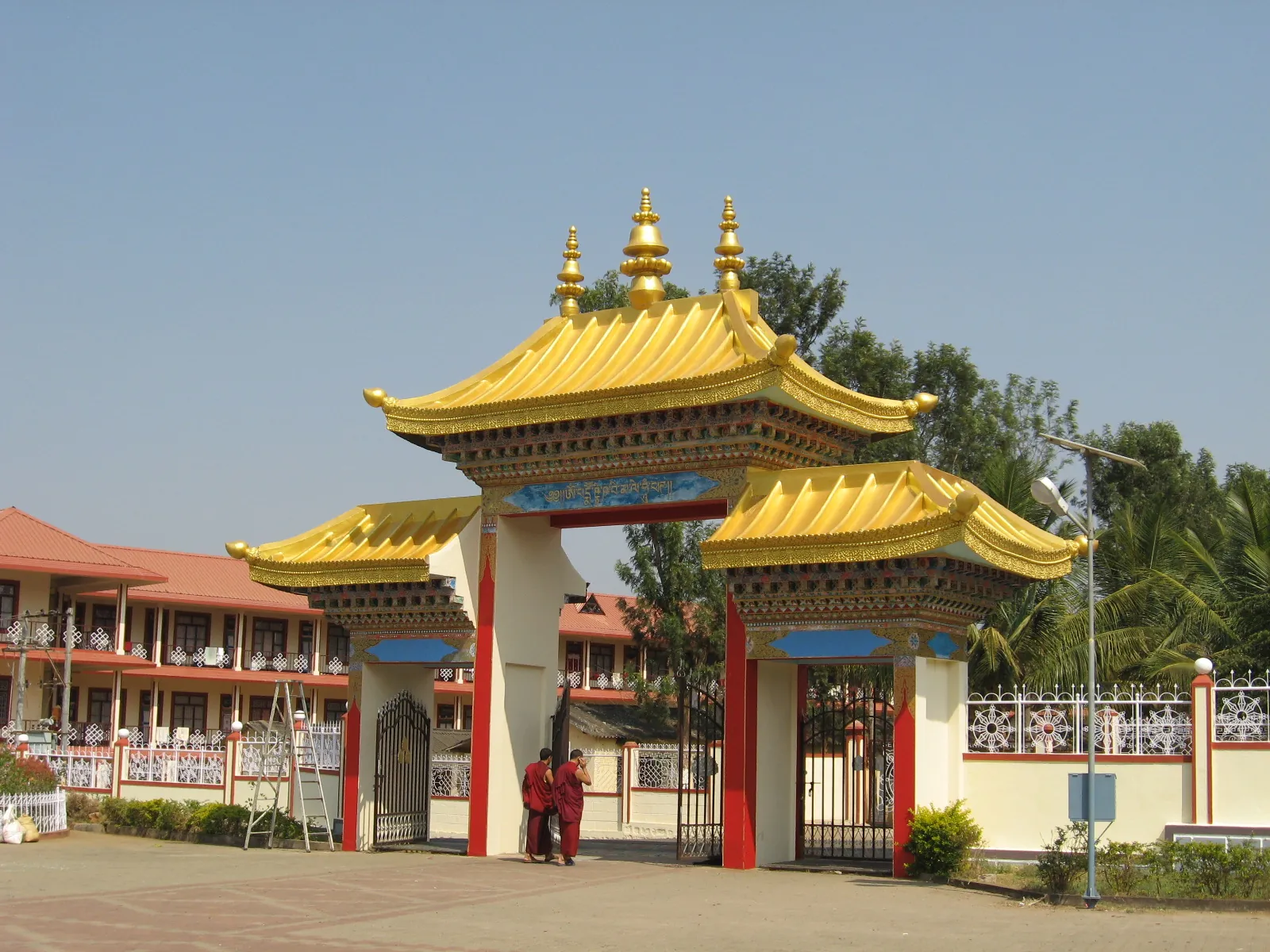
Eighty kilometres west of Mysuru, on flat red earth between paddy fields, with the Western Ghats rising behind. Open to visitors, and entirely a working monastery.
The ground itself
Satellite, terrain, streets
Aerial imagery first, the grounds, the assembly courtyard and the surrounding paddy are all visible from above. Switch to terrain for contours and relief, or to the street map for roads.
Sera Jey12.4196° N, 75.9523° E (approx.)Mapswhat3words
Bylakuppe town12.4292° N, 75.9953° EMapswhat3words
Kushalnagar12.4586° N, 75.9614° EMapswhat3words
The what3words links open their map centred on the exact point. Sera Jey's own coordinates come from a geotagged photograph rather than a survey, so treat them as accurate to a street rather than to a doorway.
The monastery sits inside the Lugsung Samdupling Tibetan settlement; Sera Mey, the Tibetan settlement offices and the Nyingma Namdroling monastery are all within a few kilometres.
Getting here
Routes in
- By air
- Kempegowda International, Bengaluru (BLR), about 269 km, roughly six hours by road. Mysuru airport is far closer but thinly served; Mangaluru and Kannur are alternatives.
- By train
- To Mysuru Junction from Bengaluru or Chennai, then road. There is no railway station at Bylakuppe itself.
- By bus
- KSRTC services run from Bengaluru's satellite bus station and from Mysuru toward Kushalnagar and Madikeri; ask for Bylakuppe or Kushalnagar and take an auto for the last stretch.
- By car
- ~80 km from Mysuru via Hunsur on the Madikeri road; ~6 km from Kushalnagar. From Bengaluru allow 5–6 hours.
- Local
- Autos and shared jeeps run between Kushalnagar, Bylakuppe town and the monasteries. The settlement is spread out, Sera and Namdroling are a few kilometres apart.
When to come
Timing
- Season
- October to March is dry and mild. The southwest monsoon, roughly June to September, is heavy here, green, beautiful and wet.
- Time of day
- Morning puja in the great assembly hall begins early. The debate courtyard is at its fullest in the late afternoon and again after dark.
- Festivals
- Losar and Monlam Chenmo (February–March) and Gaden Ngamchö (November–December) are extraordinary and crowded. Dates follow the lunar calendar, check before you build a trip around one.
- Hours
- Temple halls are generally open to visitors through the day, with a midday break. Times are not fixed by a ticket office; treat posted or spoken guidance at the gate as authoritative.
Before you book
Foreign nationals need a Protected Area Permit to stay overnight
Bylakuppe lies within a protected area. Foreign passport holders may visit the settlement during the day, but staying overnight inside it requires a Protected Area Permit (PAP) issued by India's Ministry of Home Affairs. The same applies to the Tibetan settlements at Mundgod and Hunsur.
Applications are made online at the Ministry's PAP portal, and the standing guidance is to apply at least one month before arriving in India. Indian nationals do not need a permit. Many visitors sidestep the question entirely by sleeping in Kushalnagar or Madikeri, a short drive away, and visiting by day.
Ministry of Home Affairs PAP portal
Permit rules change. Confirm current requirements with the Ministry, or with the Bureau of His Holiness the Dalai Lama, before travelling.
Etiquette
How to be a good guest
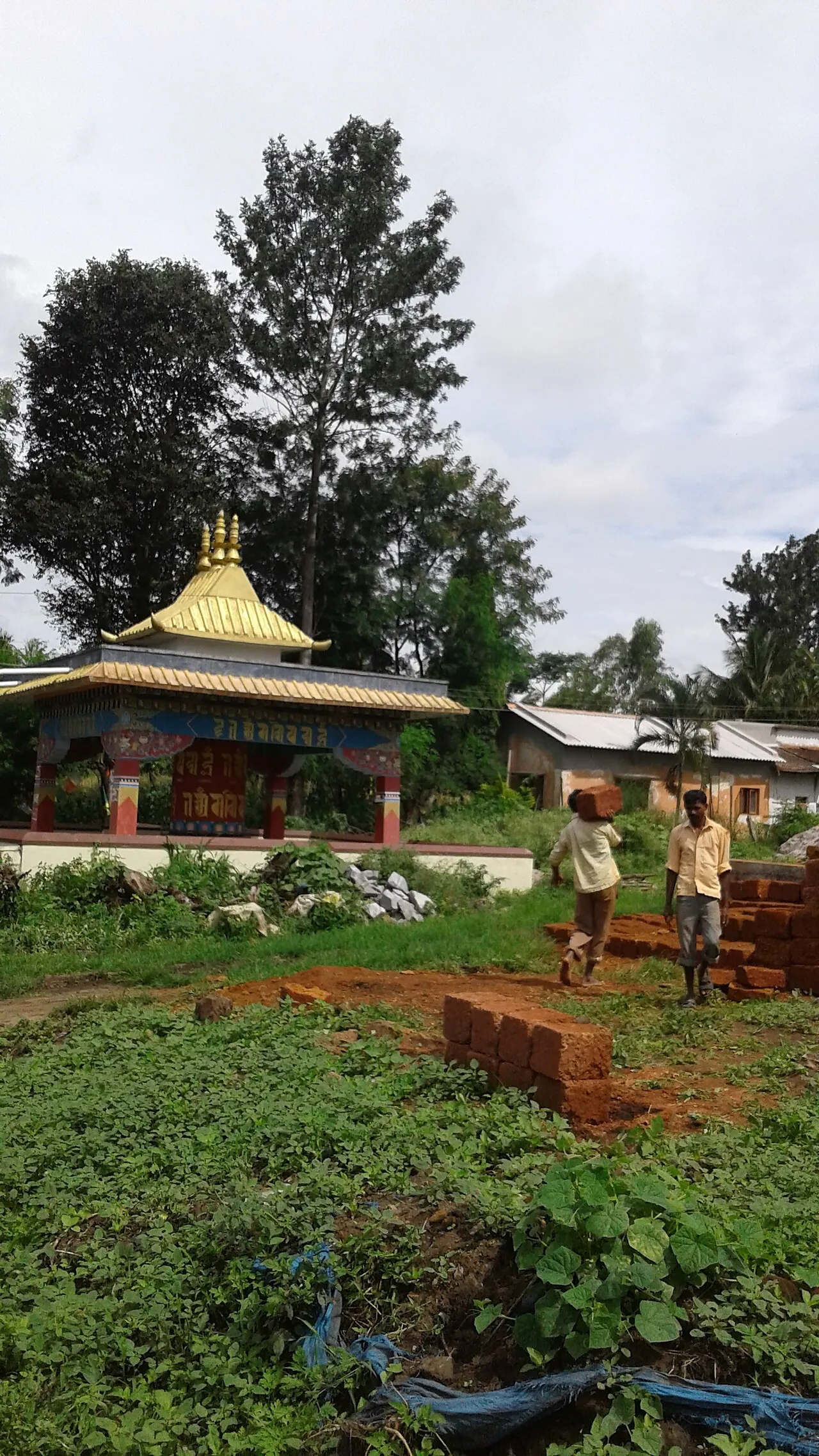
Nothing here is staged for visitors. The debate is an examination; the prayers are the assembly's actual liturgy.
Dress
Shoulders and knees covered. Remove shoes before entering any temple or prayer hall, and take hats off indoors.
Direction
Walk clockwise around stupas, prayer wheels and the interior of temples. Turn prayer wheels clockwise with the right hand.
Sitting
Sit at the back or stand quietly at the side during prayers. Never point the soles of your feet toward the shrine or toward monks.
Photographs
Ask before photographing anyone, and accept a refusal. No flash toward shrines; respect signs and instructions inside halls.
Touch
Do not handle statues, thangkas, ritual objects or texts. Tibetan texts are never placed on the floor or stepped over.
Quiet
Silence phones. Keep your voice low, the entire institution runs on sustained concentration.
Offerings
A khata, the white ceremonial scarf, is the conventional greeting offering and is sold throughout the settlement. Donations are welcome and go toward the kitchen, the clinic, the school and the fabric of the buildings. Nobody will solicit you.
Practicalities
Tibetan restaurants and small shops cluster around the settlement; cash is useful. There is no visitor centre, no ticket and no guided-tour operation, arrive politely and ask at the gate if you are unsure where you may go.
Contact
Reaching the monastery
- Post
- Sera Jey Monastic Institute for Advanced Buddhist Studies & Practice
Sera Thekchenling, P.O. Bylakuppe 571104
Periyapatna Taluk, Mysuru District
Karnataka, India - Telephone
- +91 8223 258435
- Official site
- serajeymonastery.org, for current announcements, examination dates and donations
- Branches
- Affiliated centres in New York, California, Minnesota, Toronto, Basel, Taipei, Singapore and Bangalore
Those are the monastery’s details and not this site’s. This site belongs to one monk who studies here; it speaks for him and not for Sera Jey. Anything official, from examination dates to donations to permission to visit, goes to the monastery directly at the addresses above.
Sources
References
Practical detail changes. The permit rules in particular are set by the Ministry of Home Affairs and are the one thing on this page worth checking at source before you travel.
- 1ContactSera Jey Monastic University
The postal address, telephone number, travel distances from Bengaluru, and the list of international branch centres.
- 2Protected Area PermitBureau of His Holiness the Dalai Lama
PAP requirements for foreign nationals visiting the Bylakuppe, Mundgod and Hunsur settlements.
- 3Protected Area Permit portalMinistry of Home Affairs, Government of India
The official online application for Protected Area Permits.
- 4BylakuppeWikipedia
The 1960 land grant of nearly 3,000 acres, Lugsung Samdupling founded in 1961, Dickyi Larsoe in 1969, and the settlement's population.
- 5About UsSera Jey Monastic University
The founding by Jetsun Kunkhen Lodrö Rinchen Senge, the two administrations, the Geshe Lharampa degree, the 75th abbot, and the affiliated centres abroad.
- 6Wikimedia CommonsWikimedia Foundation
The source of every photograph and portrait on this site, all freely licensed.
Every factual claim on this page rests on one of the sources above. Links open in a new tab. The full list for the whole site, and the standard this site holds itself to, is on the sources page.