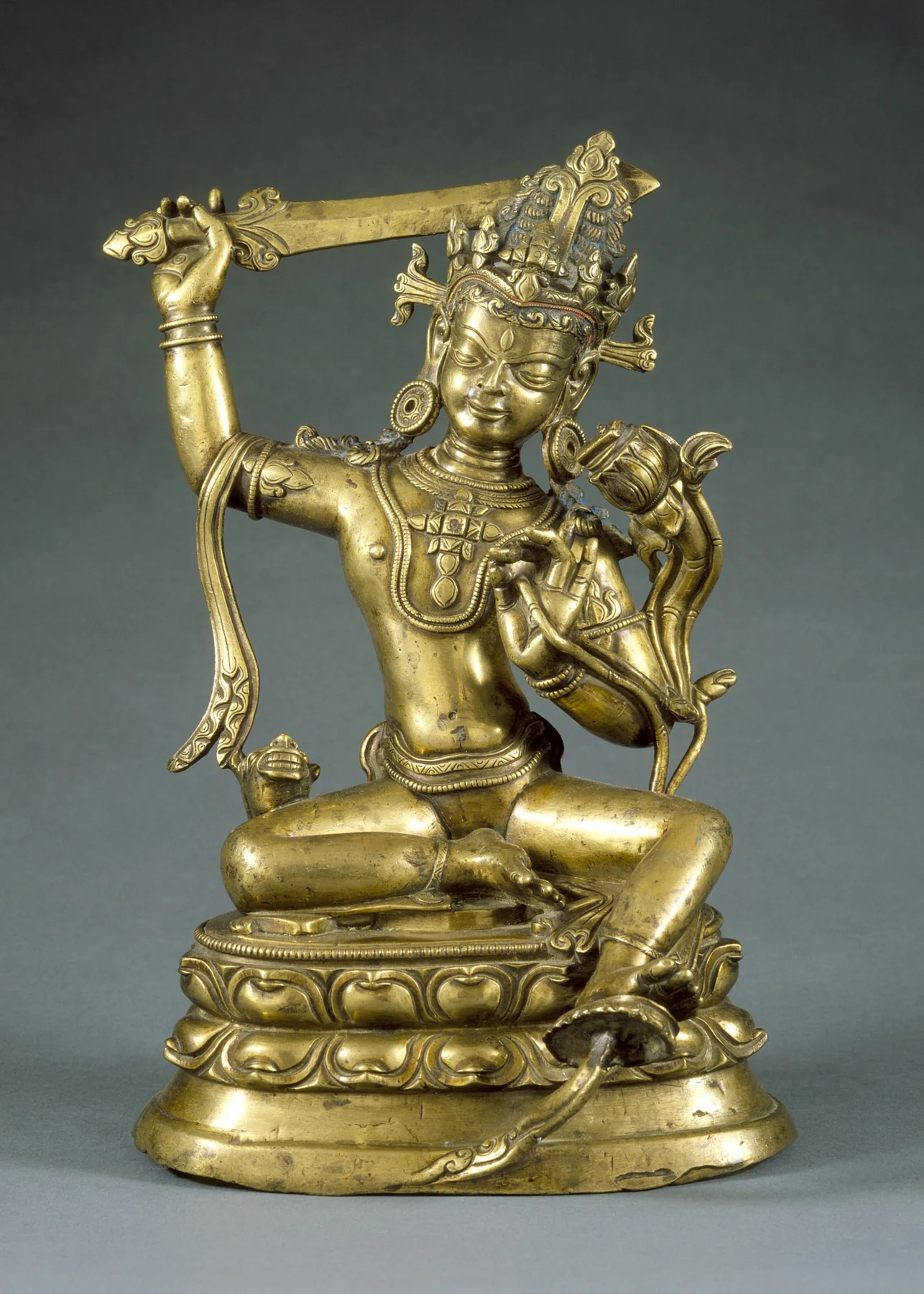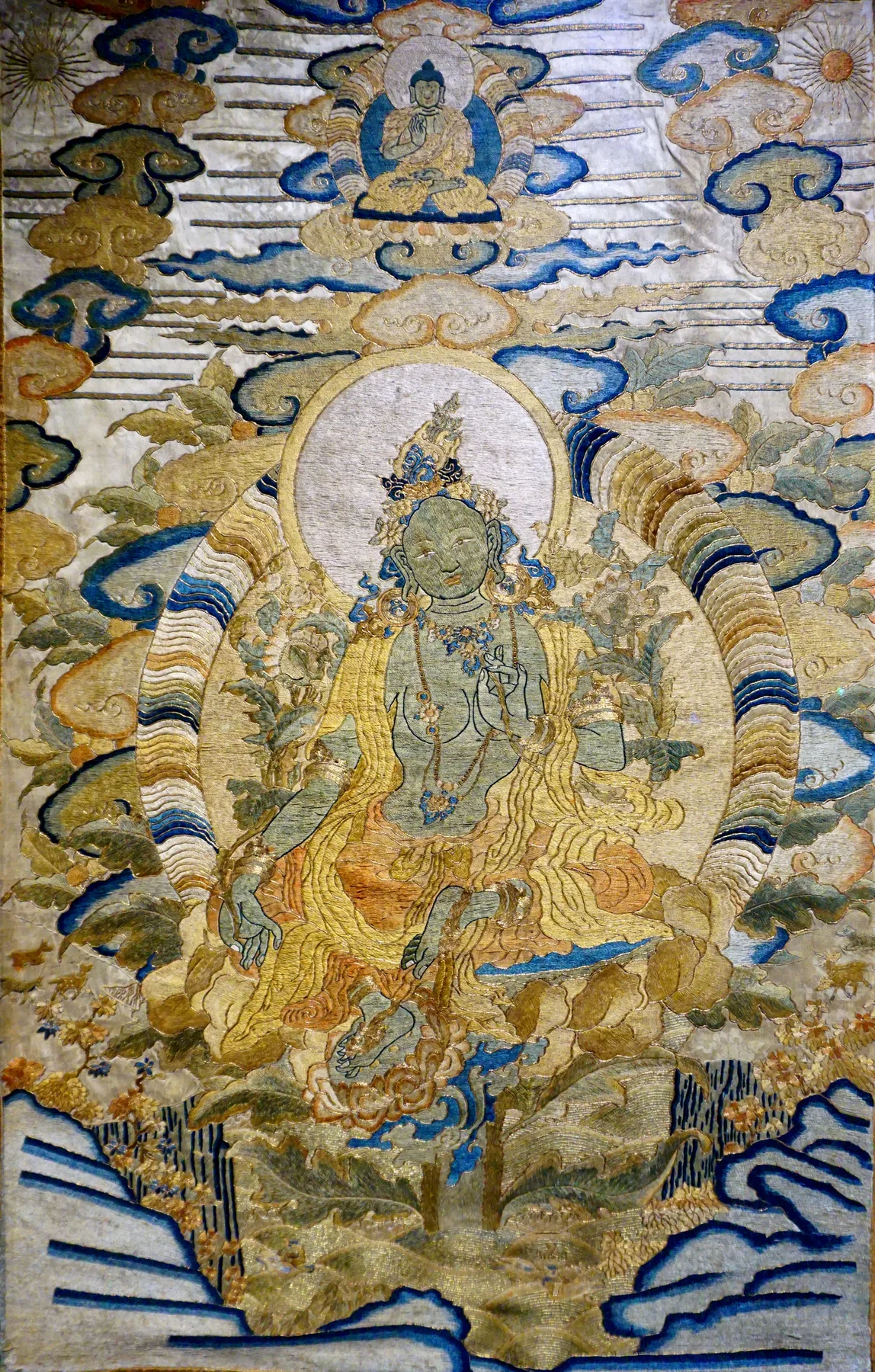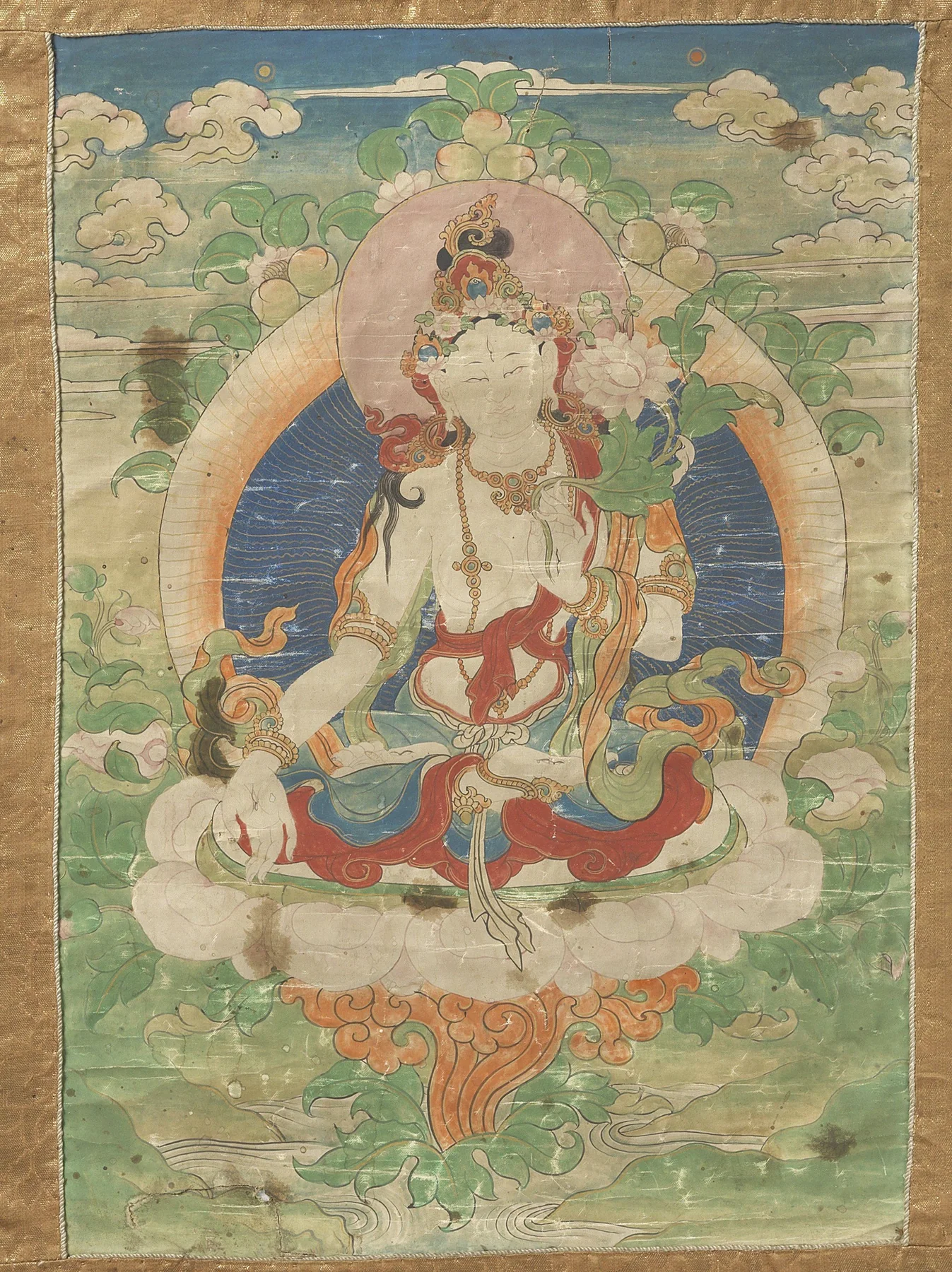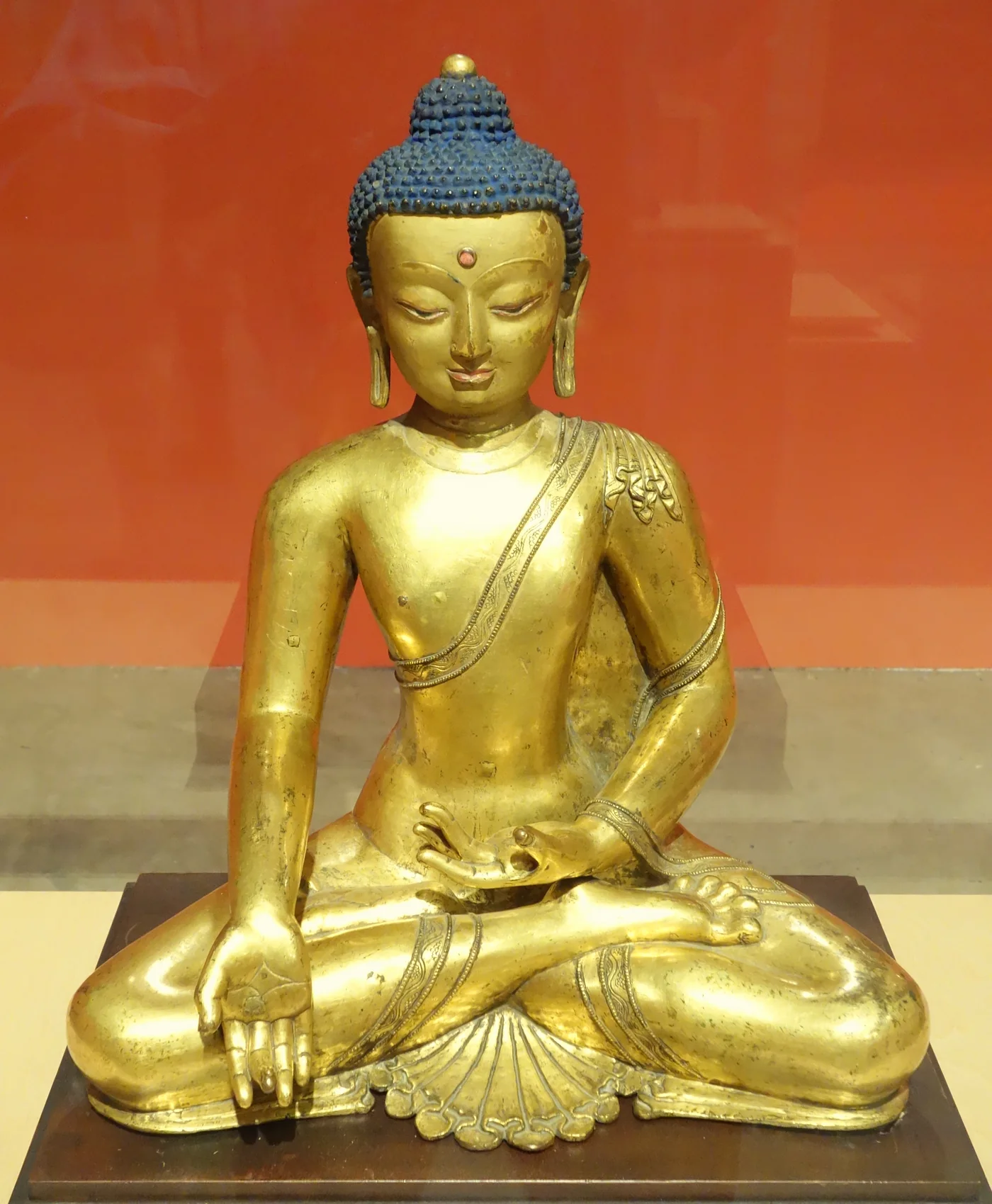
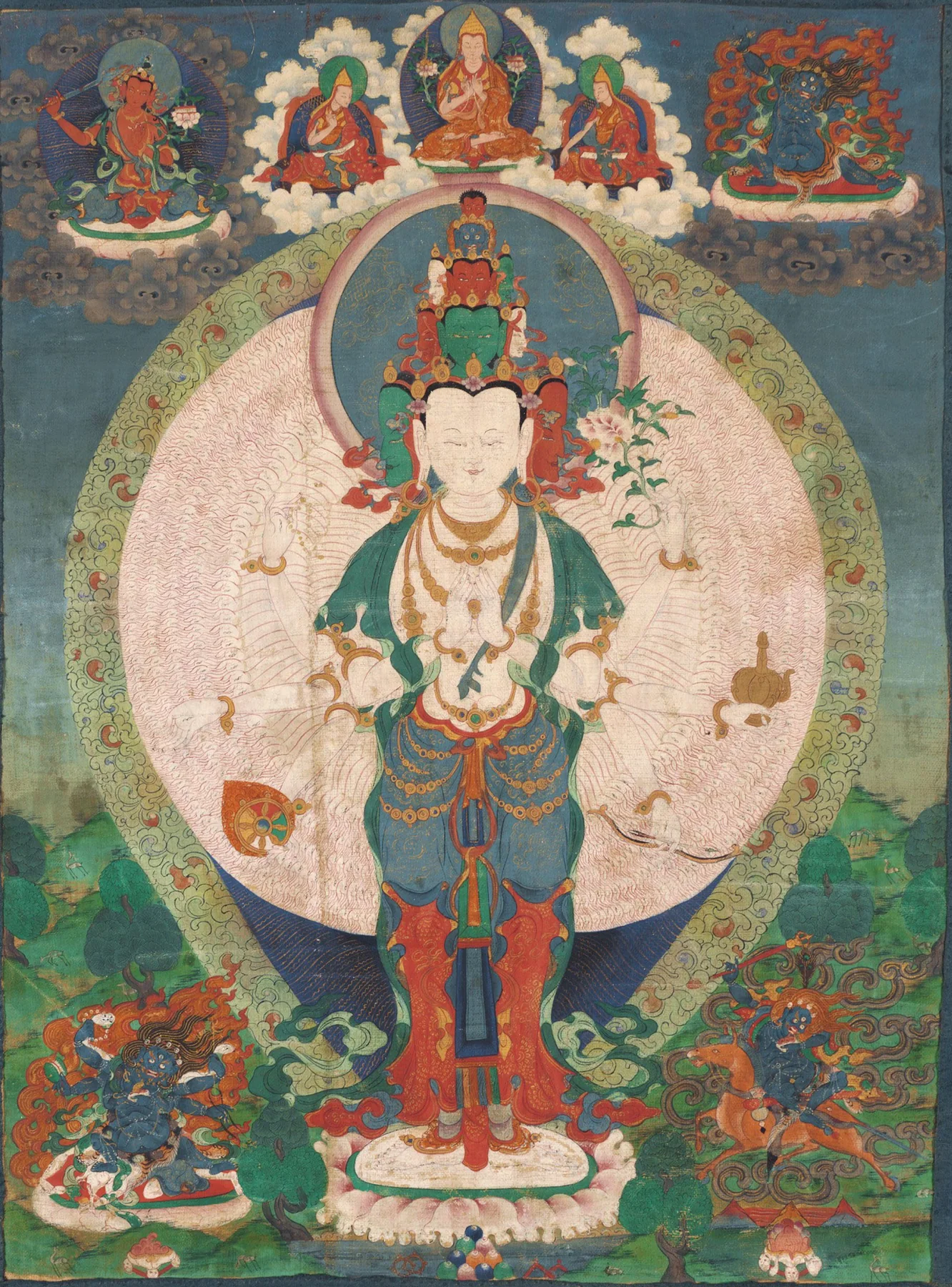
Avalokiteśvara སྤྱན་རས་གཟིགས།
Chenrezig, the bodhisattva of compassion
OM MANI PADME HUM
ཨོཾ་མ་ཎི་པདྨེ་ཧཱུྃ།
The six syllables, the most recited mantra in the Tibetan world.
Meaning, practice and sources
What it says
In the explanation taught by Lama Zopa Rinpoche, OM stands for the transformation of one's ordinary body, speech and mind into the enlightened body, speech and mind of the Compassion Buddha. MANI, the jewel, is the method side of the path to enlightenment; PADME, the lotus, is the wisdom side. HUM requests the Compassion Buddha's attention.
His Holiness the Dalai Lama's counsel alongside it is blunt. Speaking at the Mani Dhungdrub recitation in 2024, he said that “simply parroting the mantra, reciting it mechanically without any thought of bodhichitta and emptiness, will not please him”. The recitation is worth doing, but what makes it work is the compassion and the view you bring to it.
How it is recited
Recited constantly and in enormous accumulations, on a mala, while walking, while circumambulating. It is the mantra printed inside prayer wheels and carved on mani stones across the Tibetan world.
Does it need an initiation?
No initiation is required to recite it. Avalokiteśvara is a kriya (action) tantra deity; an initiation is needed only to generate yourself as the deity.
Sources
- FPMT Chokyi Gyaltsen Center, Mantra
- Lama Yeshe Wisdom Archive, The Meaning of OM MANI PADME HUM
- dalailama.com, Joining the Mani Dhungdrub (2024)